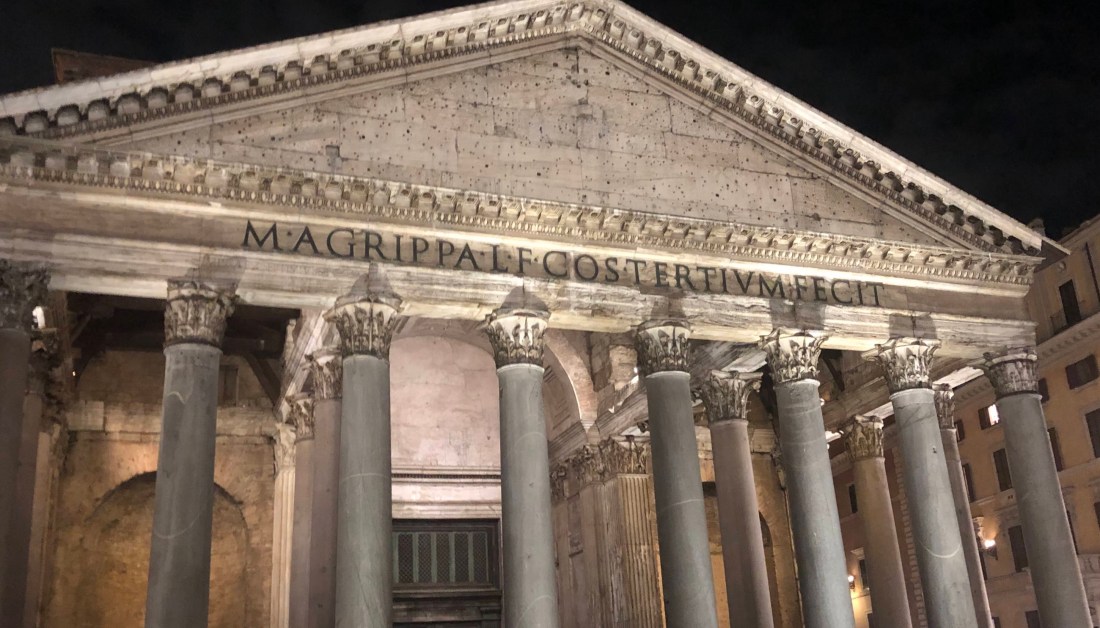
Roman Holiday: Thoughts on Fear, and a Trip to the Eternal City

“No one here gets out alive.”

On just another Sunday, I was sitting in my cousin Filomena’s apartment, sipping coffee during the weekly brunch that is a standing appointment here.

I had my normal seat next to her brother Anthony, talking about the trip to Rome that my wife and I had recently taken.

I’m not certain which one of us quoted the Lizard King, aka Jim Morrison, iconic leader of the Doors, but it regarded all the fears I had taking that trip, before I even looked at a single flight.

We embarked on this trip recently after initial plans were shut down by the pandemic and to be honest, being a little on the paranoid side in rescheduling in any of the subsequent years.

Fear has a way of making a potentially magical life event seem like a hazardous trip into the unknown.

Self defeating dialogue may go along these lines:

I’ve never been to Europe – it’s so far. What if something happens?

What if we spend all this money? The price looks excessive. What if I can’t make that money back?

I can barely sit still for an hour – how do I plan to sit for a nine hour flight?

You probably know the drill.

Paranoia was all on my end, and I’m sure my wife was wondering why I was putting off a goal I’ve had since I was young.

In the end, it was a mistake to delay this trip, on any level.

In the grand scheme, our time here on Earth is short. We’re, as you’ve no doubt heard, “a speck in the eye of the universe.” Hell, even with a long life, we’re here for the equivalent of a cup of coffee.

“No one here gets out alive.”

As our Delta flight lifted off from JFK, we made our escape as political discord (in our country) was reaching another zenith with a comically lengthy government shutdown.

Seriously. It was time to be immersed in another culture.

It was an escape to a more relaxed and chill vibe, and a road traveled where getting lost isn’t inconvenience, but instead discovery.
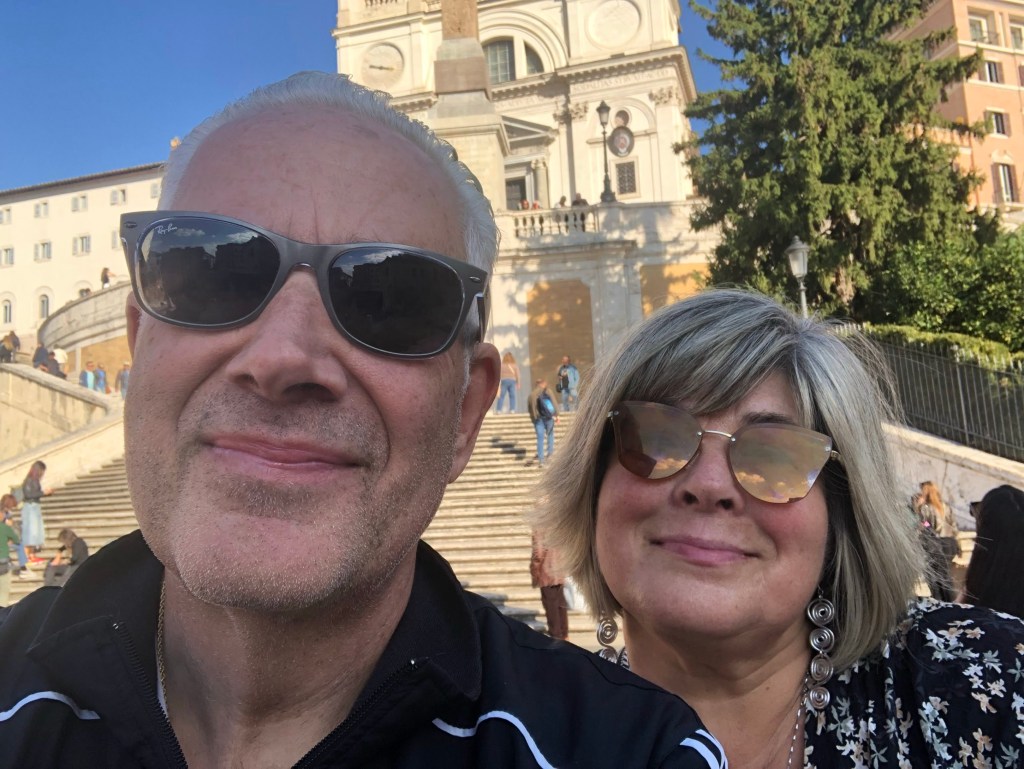
As tourists, in front of the Spanish Steps

Just Another Tourist?

Once in Rome, we were easily recognizable as tourists – “solo un tourista” – but didn’t want to be just another American tourist. We wanted to be more than self aware and respectful to this local culture that was opening a brand new world to us.

Regardless of our American roots, we wanted to blend with locals as much as possible.

Yes, of course we did the touristy things – photo opp at the Colosseum, coins into the Trevi Fountain, staring wide-eyed at the sun beaming through the Pantheon’s oculus.

We spent a crisp, autumn-like Wednesday morning in St. Peter’s Square where the sky was such a deep blue you could wonder, “Is this the closest place to heaven on earth?”

As that thought transpired, the new American Pope rode through the Square, blessing an infant within an arm’s length of where I stood.

Truly a life changing experience.
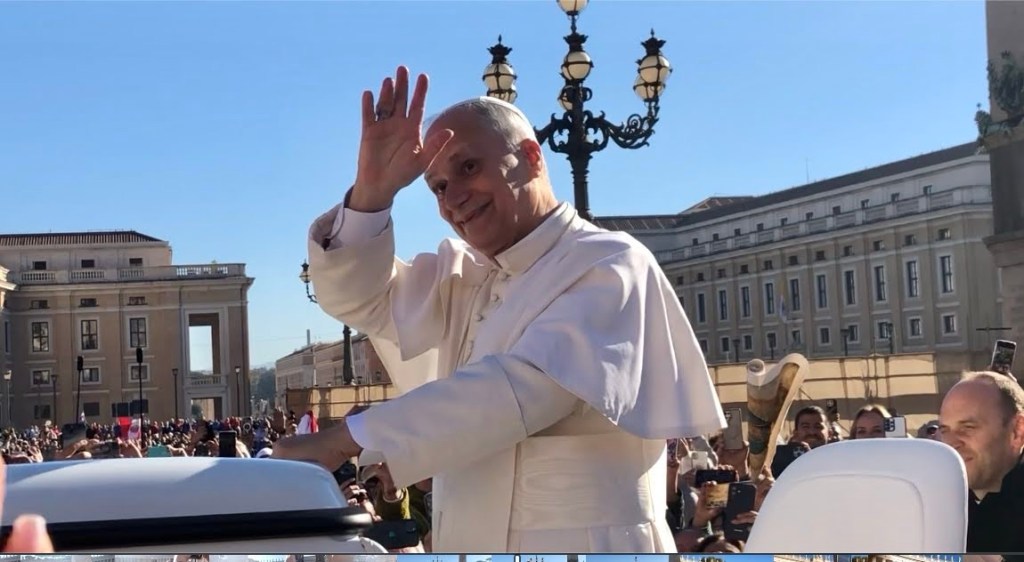
Pope Leo, a rock star in St. Peter’s Square

When the tours were over, the transformation began, from tourist to “blending in,” taking a walk on the Roman side.

We dressed in our best, and made note of the casual ease of Italian hospitality.

It was a vacation that surpassed any built up expectations that we had.

Somewhere along the line, this thought bubbled up: is this what I had experienced anxiety about?

When delaying what may become a life altering trip (or any similar event), we can’t subscribe to the belief that there will be a “better time” later – it can be a time that frequently never arrives.

Time and circumstances can be wildly unpredictable. Health, responsibilities, finances, and global conditions (pandemic, anyone?) can change, making future travel harder.

Waiting for ideal conditions? You could miss your one opportunity.

You could also miss a chance to reshape identity and priorities. Stepping outside familiar environments challenges your assumptions and creates clarity about what really matters.

I’ve always identified as “Italian,” but born in America. Being in Rome, I felt reconnected.

I wasn’t home, but I felt strangely at home regardless.

I knew I was retracing the footsteps of my family before me. An emotional reconnection, for sure.

You also realize that while money can often be earned again, time, youth, and certain life windows cannot.

Delaying the trip as we did felt responsible at the time, but as another calendar year approached, I didn’t want this window to close.

FEAR = False Evidence Appearing Real

Fear and anxiety, whether bothersome or crippling, rarely take a day off. When it was time to depart, the nervousness I felt resulted in a cappucino spilled onto the gleaming floor at the airport near our gate, and I got one last dose of Italian hospitality: a quick clean-up by shop workers, a pleasant exchange, and a replacement coffee at no charge for my troubles.

My worries were unfounded. The nine hour flight back to New York was the smoothest I’ve ever taken.

Touching down after the flight, the breath I exhaled was one not just of relief, but of immense gratitude – I never forget the privileges afforded to us to travel, to take the journey that I had contemplated since I was a kid – when posters of Rome adorned the walls of my bedroom, right alongside the sports and rock stars that I idolized.

To make that reconnection to loved ones long gone on that foreign soil, on the cobblestones that they had walked so many decades ago: let’s just say Rome did change me – it changed us. Our perceptions had shifted, and reassimilation into life in America proved to be a little more of a challenge than we thought.

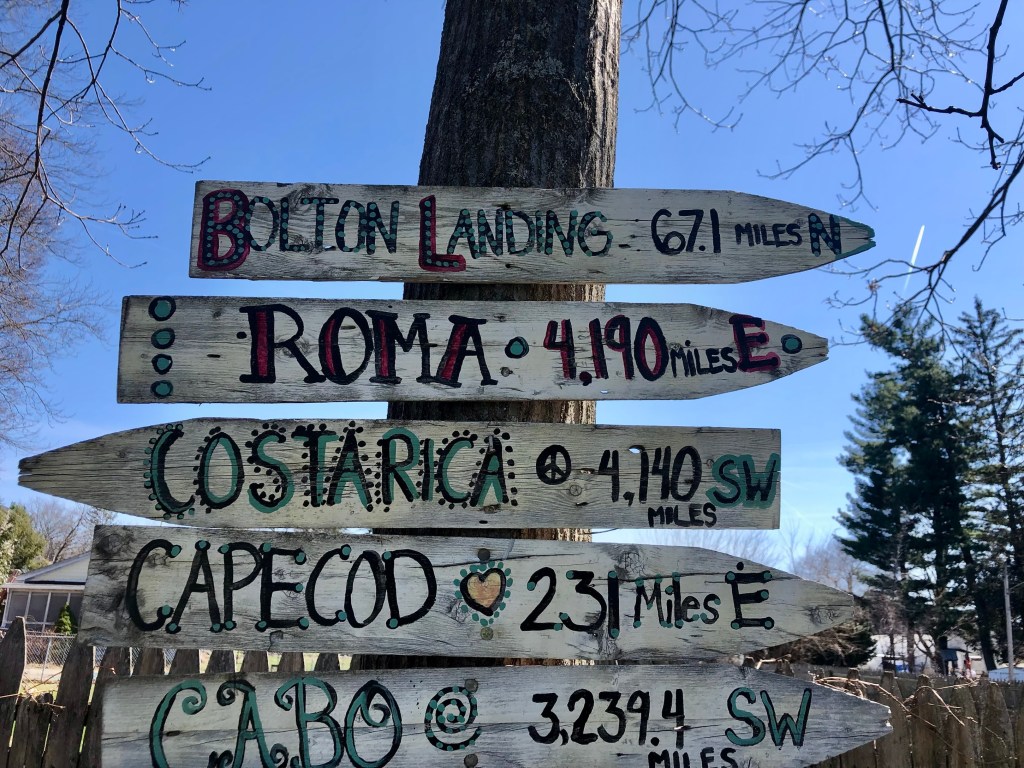
The cure to that would always wait for us, if we ever want to return, only a little over 4,000 miles away.
Like this article? There are many more like it on this site. Browse around! Please share on your favorite social media channel. For additional articles, see the related content below, and to be notified of future posts, please enter your email in the space provided.

Paul McCartney, First Dates, Faith in the Desert: the Intersection of Tradition, Love, and Hope

During a recent broadcast of the Saturday Night Live 50th anniversary special, former Beatles frontman Paul McCartney and his band performed an iconic Beatles medley to close the show.

The medley concludes with this lyric from “The End”:

In the end, the love you take is equal to the love you make

Love, as represented here, looks to not be just a romantic notion. It represents acts of love – whether toward neighbor, friends, and your fellow man.

McCartney has described this line as a philosophical reflection on reciprocity and love. It suggests that the amount of love and kindness you receive in life is directly proportional to the love and kindness you give.

In short, a poetic expression of emotional karma—what you put into the world, especially in terms of love, is what you ultimately get back.

McCartney has said that he wanted to leave listeners with something uplifting and meaningful, which he did without doubt.

Is this type of love in short supply, which is something we have been led to believe? Are the talking heads right? Will we, ultimately, experience nothing but division and hate?

Begin With Your Roots

Love begins with a base. In my opinion, that base begins early with an immersion into traditions, and the continued practice of those traditions.

As many of you know, my traditional bent runs deep into Italian American culture.

As my wife and I sat at our dining room table, eating the last of the meatballs made over a recent weekend, she presented a theory that I would have thought, in the past, sacrilegious.

The dish we had, prepared in our kitchen, just didn’t compare with the ones our beloved Nonna had made.

They may have surpassed them in texture and taste.

Like I said, absolutely sacrilegious.

There’s only one way that could have happened.

A rapt attention to, and practice of, the traditional way of life that I was raised with.

You could say that encouraging a traditional, or old-school, way of thinking has been hyper politicized recently.

As if those of us that appreciate ways of traditional thinking or lifestyle are closed minded to new ideas or concepts.

I would disagree.

Traditions are enhanced via experimentation. The aforementioned food on my plate, while drawn from my grandmother’s decades of experience in the kitchen, was not strictly her recipe.

We (my wife and I) dared to experiment.

Would my Nonna – who I admired almost more than anyone – would she have approved of this experimental bent?

Since it was a labor of love, I think yes.

A New Beginning

Well over 30 years ago, my wife and I sat across from each other at a romantic table at a new restaurant called LoPorto’s.

The table was close to a dimly lit bar area, but elevated to another level looking over that small space. She was not yet even my girlfriend. It was our first date.

I don’t remember what we ate that night, but I do recall the restaurant was without a beer and wine license. No matter. The owner, Michael, was good enough to give us glasses of his own homemade wine, pouring us a robust red to go with our traditional Italian meal.

It was then my wife began her immersion into the traditions of my world. One that would lead her to the kitchens of my grandmother and godmother, into the recipes of love that were a staple of my upbringing.

She did so until just before the end of their earthly lives, when they could no longer cook or teach. But the lessons had been passed.

The girl who sat across from me in LoPorto’s was now the woman who embodied the spirit and love of tradition of two old Sicilians. Traditions that were flickering embers that now burn bright in our little kitchen.

The Ultimate Act of Hope

Earlier this spring, Roman Catholic faithful around the world observed the period of Lent, leading up to Easter Sunday.

The origins of Lent detail a wandering Jesus in the desert, spending 40 days there while fighting off temptation and His demons.

That 40 day journey of Jesus can be seen as the ultimate act of hope – a powerful testament to trust, otherworldly endurance, and purpose.

Without support or comfort, Jesus enters the desert alone. This solitude is not one of despair, but a hopeful retreat. He has to endure fasting, struggling against temptation, waging war against Satan himself.

The desert symbolizes a crucible where His hope is refined. Jesus emerges not broken, but empowered – and prepared for His mission.

The desert experience is not just personal – He walked through the heat and sand for all of us. In McCartney’s concept, taking no love but giving all.

With love, tradition, and hope, we are shown that even in our own deserts – our trials, doubts, and temptations – there is a way through.

In the end, the love you take is equal to the love you make.

Thanks to McCartney, a timeless maxim to live by.

Like this article? There are almost 150 more like it on this site. Browse around! Please share on your favorite social media channel. For additional articles, see the related content below, and to be notified of future posts, please enter your email in the space provided.
Of Bats and Men: Tales of a Blue Collar Renaissance Man

Bats, perhaps undeservedly, have a bad reputation.

Portrayed in media and movies as fearsome, blood draining predators, being wary of bats in your midst is a common theme for just about all of us.

But, bats are beneficial to us in many ways. According to the U.S. Fish & Wildlife service:

“Bats play an essential role in pest control, pollinating plants and dispersing seeds. Recent studies estimate that bats eat enough pests to save more than $1 billion per year in crop damage and pesticide costs in the United States corn industry alone. Across all agricultural production, consumption of insect pests by bats results in a savings of more than $3 billion per year.”

Photo by Monstera Production on Pexels.com

My grandfather wasn’t having any of that. More than a few years ago, when we both worked in the family restaurant, a bat made it’s way from an upper floor of the building to the ground floor to, per his view, become a menace to employees and customers alike.

Before the bat could get to the dining room, my grandfather picked up a broom, and with one well timed swing, knocked the bat out of the air to the ground, stunning it.

Before it’s composure could be regained, he flipped over an old bucket, trapping it underneath. At that point, I thought, “great – he’s going to bring the bucket outside, letting the critter back into the wild.”

But, that wasn’t quite his plan.

Instead of following a humane “catch and release” plan, the man I called “Pop” flipped the bucket off the bat, while in the same motion swinging the broom down, smashing the bat against the floor.

Not once or twice, but several times, to my youthful horror. His plan all along.

Protection of family, property, and customer – especially the ones eating my Nonna’s pasta e fagioli in the dining room.

Aside from his violent tendencies toward nocturnal, flying mammals, my grandfather was a work and family centric man with a kind heart that matched his efforts. Other than protecting kin and customers from bat intrusions during a meal, he exhibited so many other skills.

My grandfather was no one-talent specialist. He was a true renaissance man, of the blue collar variety.

******************

A clogged toilet in need of attention? It was no match for him. Fixed in a jiffy.

Someone flushes their dentures accidently down the same said toilet? No matter. Toilet taken apart, dentures saved.

Industrial dishwasher doesn’t meet the temperature requirements to pass a health department inspection? Watch his plumbing and electrical skills go to work. No match for my grandfather.

Frantic call from his sister-in-law that an electrical outlet in the house is on fire? No need to call for help! Fire out, damage limited – no match.

Need to grind, by hand, ten loaves of bread in 15 minutes so my grandmother can make meatballs? Again, no match.

Need to work an eight hour shift at the factory, then another shift at the family restaurant? Six days a week? Time and hard work were no match for my grandfather. He went through physical work shifts like a buzzsaw.

Settling in a foreign land, with no grasp of English, and taking every dirty job that not many would take, so that you could provide for your family? No dirty job could match him.

As I wrote previously, coming to America was just the first step at the bottom of the hill. He was relentless in his ascent up the mountain of the American dream.

That dream must have looked impossible to a man whose English was rough, and came to the USA with primarily physical skills.

His was the story of thousands of Italians who emigrated to these shores, to the land of hope and dreams for sons and daughters to follow.

*******************

The recently late, great songwriter Kris Kristofferson was an artistic renaissance man. Elon Musk has transformed more than a couple of industries on the technology side. My grandfather Sebastian survived and thrived in America with his ability to adjust and adapt to any situation.

There were times in his life that I’m sure he thought the odds were insurmountable. You would have never known from his demeanor. He was a straightforward, stoic guy that always seemed to be on a mission. His mission: survival and success, at all costs.

He was, and is, one of my heroes.

Thank you Anthony Prezio for the initial inspiration for this article. The memories we’ve brought up together have made me laugh, reflect, and feel grateful.

If you liked this article, please share on your favorite social media channel. For additional articles, see the related content below.

Right Back Where We Started, Work as Creativity, and “Are You Coming In Today?”

The windshield wipers on our Honda Accord pulsed in rhythmic fashion, clearing a heavy rain from the glass as my wife and I were navigating a roundabout near Hyannis airport.

We were on the hunt for a new place to go, a French bakery near the airport that was said to offer an elevated almond croissant. So, off we went.

It was enough of a challenge to drive in the rain, but it seemed the entire landscape of Barnstable County was replacing sewers, so my challenge was also littered with road closures, construction equipment, and various debris.

As the rain came down harder, my wife quipped, “Well, we’re right back where we started!”

Where we started was 32 years ago as a couple dating, on our first trip to Cape Cod. We happened to pick a week with so much rain that Noah’s ark would’ve begun planning stages.

Did we care? Not really. We were dating, had a hotel room with a sweet fireplace, and were within a stone’s throw of a wine store. We survived.

From that point on, many summer weeks were spent on the Cape. As newlyweds, as parents, we didn’t miss many opportunities. Even during a pandemic year, we weren’t breaking the streak.

As a toddler, my daughter realized she had a disdain for the feeling of sand on her feet, but she toughed it out. At that age, our son rocketed down that sandy beach, running at such a pace that his father couldn’t catch him. What we did catch was a glimpse of his future as an elite runner.

As teenagers and young adults, they still loved those beach vacations with Mom and Dad. The four of us always had fun on the drive over, and it was always the four of us on the beach together.

Now, they’re adults with lives on the move – one, helping so many clients with their mental health challenges, making our world a better place. The other, teaching other humans how to run fast and win the races of their lives.

They can rarely vacation with us now. But, when we see young couples on the beach, with their young ones in tow, we remember.

Now, it’s usually just the two of us. Right back where we started. In the Cape, watching a driving rain dance off the window of a French bakery.

We never did get that almond croissant (sold out), so we got an order of chargrilled oysters instead. That, and another trip with a boatload of memories.

************************

“Do we need more creators?”

That was the question posed in an article by GQ culture columnist Chris Black, in response to a 60 Minutes interview with music producer Rick Rubin.

He went on to say (edited for the purpose of brevity):

Is creativity for everyone? Is it something that can be learned? I’m not sure, but I am sure that everyone doesn’t need to be creative. We have enough creative directors and photographers to last us a lifetime. The memes tell us we need more electricians and less “creators.”

I have always been jealous of people who are good with numbers and spreadsheets. It is a tangible and viable skill. Doctors, lawyers, accountants, and plumbers are all admirable professions.

But because of social media and idea peddlers like music super producer Rick Rubin, young people who just want to film themselves getting dressed and drinking out of Stanley mugs can think of themselves as “creatives.” Meanwhile, there is no shame in being an Excel wizard or a physician’s assistant.

Not everyone is meant to be creative, and that is okay. We should all be proud of what we do.”

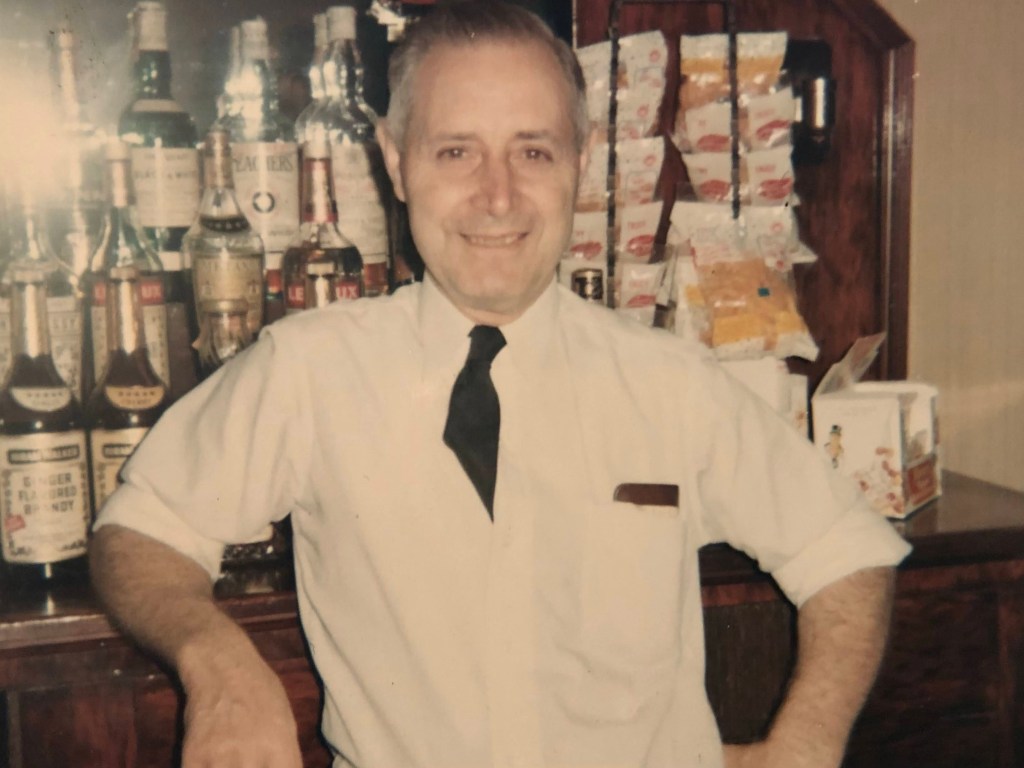
My grandfather, behind the bar of our family’s first restaurant

Black’s article got me thinking of my grandfather Sebastian who, while solely working with his hands, was absolutely a very creative man. He could do so many things with those hands of stone, and with them, created a life here in America and a pathway to success for future generations that he could never have done in his original home of Calabria, Italy.

In my mind, setting up your descendants with an easier path is the highest form of creative work. One that not many accomplish.

He was a true renaissance man – laborer, factory worker, bartender, hotel manager, among others. My generation owes him a debt of gratitude that we can never repay.

***********************

“Are you coming in today?”

It’s the phrase that entered back into my mind as I was discussing happy things with my cousin Anthony at our weekly cousins’ breakfast. He’s about to become a grandfather in September (two times over: twins!), and the subject of paternity leave came up.

(PSA: if you are not sharing a meal once a week with 10 or 12 of your closest relatives, you know not what you’re missing!)

Paternity leave (otherwise known as the Family & Medical Leave Act) is a fairly new offering in corporate America, that gives new fathers up to six months off after the birth of a child. I joked that, back in 1995, I was lucky to get any time.

Being a cog in our family’s restaurant, a small business to be sure, I told him that soon after my daughter was born I’m positive I heard, in a phone conversation, “Are you coming in today?”

In the small business realm, there was no paternity leave. With long hours being the norm in a restaurant, I had to steal moments with my newborn when I could.

Nowadays, I watch younger colleagues in my current job take weeks of leave as their children are born, to help their wives and form those early bonds with newborns that some may say are most critical.

Paternity leave for new fathers makes life easier, no question.

Reading this, you may think I’m a little jealous of the younger generation that can take advantage of such a perk. Yes, I think of what could have been.

But, I have another take.

My children were both born in a time where doing difficult things, and making difficult choices, was commonplace. I actually relished the opportunity to meet a challenge, and I knew my challenges were nothing compared to, say, what my great grandmother faced.

“Are you coming in today?”

Yeah, I’ll be in. I need a few minutes. I’m going to hold my daughter, for just a little bit longer.

Thanks to my cousin, Anthony Prezio, for the nudge to include segment three of this post, and happy birthday month to our daughter, Gabrielle, of whom we couldn’t be more proud.

If you liked this article, please share on your favorite social media channel. For additional articles, see the related content below.

Navigating My 60’s: Living the Contrarian Lifestyle, and Loving It

Literally meaning “to be against,” a contrarian is someone who takes an opposite stance to popular opinion. To have a healthy suspicion of what is perceived as “popular” is a good thing, and I often find myself on the contrarian side. As I’ve gotten older, I have noted that most people do things that others do because of a herd mentality, not necessarily from their own choices.

Occasionally breaking this habit of being contrarian is necessary to enjoy life, of course (i.e. attending a major concert or popular restaurant), but the Sicilian side of me casts a wary eye to the idea of following due to indecisiveness, or just for the hell of it.

This mold of the contrarian mentality began to form in me at an early age – in my middle school years, while my peers may have been listening to the Stones, Beatles, or disco, I was being introduced to the Clash, Van Halen, and the Sex Pistols.

(Disclaimer: I absolutely adore the Stones, Beatles, and….yes, disco!)

Rolling Stones: Wikipedia

In high school, while the rest of the guys in the military academy I attended had short flat top or “high and tight” haircuts, I worked on growing mine out to shoulder length – much to the chagrin of my parents and school administration.

At work in the family business, I noticed the contrarian mentality in action.

While the approved working hours were nine to five in the outside world, my grandmother was often hustling down to the restaurant at 6 A.M. to get a roasted turkey in the oven, and a cauldron of soup simmering on the stove top to serve for the lunch hour rush that same day.

While many men my grandfather’s age (and younger) would be occupying a bar stool during the day, “Pop” never touched a drop of alcohol. There was a business to help run, and he needed clarity of mind. He saw less than that as a weakness.

The examples above proved that although I may have discovered the ability to think differently on my own, it was reinforced by mentors and family members.

There’s always pressure to live a lifestyle that other Americans embrace, but my grandparents’ generation was different.

When it seemed the world was getting complicated and spinning into chaos, they were happy with a simple existence and singular focus.

Growing Older: New Data, New Opinion

You may notice that when you hit your 50s and 60s, the stakes have changed.

You’ve modified your priorities. You have more confidence than in the past.

You’re not all that concerned with impressing other people. You may not buy things you don’t need, like you used to.

Your idea of success could transform: it’s not unusual for me to feel more invested in my children’s success than my own these days.

“My 60s is my favorite decade of life. When people ask you to do something when you’re in your 60s, you just say ‘no’.” – Jerry Seinfeld

Tapping Age Old Wisdom

My grandparents, my great aunts, (Carmela and Nicolina) and other members of my extended family had a great understanding of what makes life meaningful, and the perception of what became more important as they aged.

As always, I draw from that well of sage advice that was passed to me in my youth, as I grow older.

Your body does not have to break down as you age from neglect. A friend passed along recently the great idea to “rediscover your inner child,” and make room for play. When I was younger, I loved to be outside and run around. So, running has made it’s way back into my life.

I believe the more physical activity you can muster, the better: it helps keep an older body fine tuned, and hopefully retards the aging process.

My Nonna once said: “you stop moving, you die.” She knew the importance of consistent  movement, and understood that’s what the body is constructed for. My best memories of her include the non-stop action in her kitchen, whether home or business.

Her theories may have been old school, but she was rarely wrong.

Like them, as I age, I appreciate experience over material.

For my wife and I, traveling more is important as we get older.  Because we’ve decided that a larger home, unwieldy tax burdens, and new cars just aren’t that important, we find ourselves with a little extra cash to squirrel away for travel.

Nicolina, and earlier in my life, Carmela, practiced this same concept of experience over things, the majority of time on a more local level. As I wrote in a previous post:

Gathering around the table for a shared meal or glass of wine is a sure fountain of youth – flashes of my childhood, adolescence, and beyond are abundant at table, whether sitting with family and friends.

I like to focus on the big things, and forget about the minutiae.  I care about my son. My daughter. My wife. Extended family, friends, my older neighbors. The list of what I care about is brief: the “I don’t give a shit” list is longer, and growing.

I continue to be apathetic in regard to politics (even in an election year) – so a rift forming between family or friends because of political preference is unlikely, and wouldn’t make any sense in my life – much as it makes zero sense in the lives of others.

Nonna loved voting with her gut and instinct, and never missed her opportunity to vote. She even supported a newly elected pope because she “liked his face.”

Her Sicilian instinct moved her to vote for the “better human” in any election, and we like to think we do the same.

Time, flowing like a river

I also have cultivated an understanding of the importance of time: meaning, the time you have left remaining.

This is not what I would think about as a man in my twenties. Time was not a factor.

But now, being appreciative of every moment you can spend with friends and family is of paramount importance.

My time here is finite. Yours, as well.

When that realization really hits home, you understand the significance: what the outside world deems as necessary is bull, and you simply don’t have the time for that.

You don’t necessarily have to be older to enjoy this way of thinking – you can be one of those younger outliers – but there will come a time when a light switch is flipped:

You know exactly who you are.

You know what you stand for, and where your standards lie.

So, if you still want to hop on the bandwagon of a resolution to achieve in this (still) brand new year, I’ve got one for you: spend your time as if that hourglass is running out, and you’re looking right at it.

That’s the contrarian lifestyle in action.

Like this article? There are over 145 more like it on this site. Browse around! Please share on your favorite social media channel. For additional articles, see the related content below, and to be notified of future posts, please enter your email in the space provided.