Of Bats and Men: Tales of a Blue Collar Renaissance Man

Bats, perhaps undeservedly, have a bad reputation.

Portrayed in media and movies as fearsome, blood draining predators, being wary of bats in your midst is a common theme for just about all of us.

But, bats are beneficial to us in many ways. According to the U.S. Fish & Wildlife service:

“Bats play an essential role in pest control, pollinating plants and dispersing seeds. Recent studies estimate that bats eat enough pests to save more than $1 billion per year in crop damage and pesticide costs in the United States corn industry alone. Across all agricultural production, consumption of insect pests by bats results in a savings of more than $3 billion per year.”
Photo by Monstera Production on Pexels.com

My grandfather wasn’t having any of that. More than a few years ago, when we both worked in the family restaurant, a bat made it’s way from an upper floor of the building to the ground floor to, per his view, become a menace to employees and customers alike.

Before the bat could get to the dining room, my grandfather picked up a broom, and with one well timed swing, knocked the bat out of the air to the ground, stunning it.

Before it’s composure could be regained, he flipped over an old bucket, trapping it underneath. At that point, I thought, “great – he’s going to bring the bucket outside, letting the critter back into the wild.”

But, that wasn’t quite his plan.

Instead of following a humane “catch and release” plan, the man I called “Pop” flipped the bucket off the bat, while in the same motion swinging the broom down, smashing the bat against the floor.

Not once or twice, but several times, to my youthful horror. His plan all along.

Protection of family, property, and customer – especially the ones eating my Nonna’s pasta e fagioli in the dining room.

Aside from his violent tendencies toward nocturnal, flying mammals, my grandfather was a work and family centric man with a kind heart that matched his efforts. Other than protecting kin and customers from bat intrusions during a meal, he exhibited so many other skills.

My grandfather was no one-talent specialist. He was a true renaissance man, of the blue collar variety.

******************

A clogged toilet in need of attention? It was no match for him. Fixed in a jiffy.

Someone flushes their dentures accidently down the same said toilet? No matter. Toilet taken apart, dentures saved.

Industrial dishwasher doesn’t meet the temperature requirements to pass a health department inspection? Watch his plumbing and electrical skills go to work. No match for my grandfather.

Frantic call from his sister-in-law that an electrical outlet in the house is on fire? No need to call for help! Fire out, damage limited – no match.

Need to grind, by hand, ten loaves of bread in 15 minutes so my grandmother can make meatballs? Again, no match.

Need to work an eight hour shift at the factory, then another shift at the family restaurant? Six days a week? Time and hard work were no match for my grandfather. He went through physical work shifts like a buzzsaw.

Settling in a foreign land, with no grasp of English, and taking every dirty job that not many would take, so that you could provide for your family? No dirty job could match him.

As I wrote previously, coming to America was just the first step at the bottom of the hill. He was relentless in his ascent up the mountain of the American dream.

That dream must have looked impossible to a man whose English was rough, and came to the USA with primarily physical skills.

His was the story of thousands of Italians who emigrated to these shores, to the land of hope and dreams for sons and daughters to follow.

*******************

The recently late, great songwriter Kris Kristofferson was an artistic renaissance man. Elon Musk has transformed more than a couple of industries on the technology side. My grandfather Sebastian survived and thrived in America with his ability to adjust and adapt to any situation.

There were times in his life that I’m sure he thought the odds were insurmountable. You would have never known from his demeanor. He was a straightforward, stoic guy that always seemed to be on a mission. His mission: survival and success, at all costs.

He was, and is, one of my heroes.

Thank you Anthony Prezio for the initial inspiration for this article. The memories we’ve brought up together have made me laugh, reflect, and feel grateful.

If you liked this article, please share on your favorite social media channel. For additional articles, see the related content below.

The System was Rigged Against Them – But it Didn’t Matter

The system was rigged against them – but it didn’t matter.

The system only accepted immigrants physically – as they drifted into Ellis Island, New Orleans, San Francisco – but, the acceptance ended there.

Your skin tone, your faith, your language was not accepted.

Even the President of the United States scoffed as immigrants made their way to these shores.

Once here, the system was surely rigged against those that didn’t speak, or struggled with, English.

For those with a rudimentary education, the system was, without a doubt, rigged. They hadn’t a chance in the world.

Immigrants that possessed basic skills that would have them take the most dangerous work for menial pay were sitting ducks for this rigged system. Many would fall ill, suffer serious and debilitating injuries, and death.

The system was rigged if you had no one in America that came here previously, to gain early knowledge about the system. Your edge, your advantage, equaled less than zero.

The system was rigged with prejudice, bigotry, and savagery that few remember, but many experienced. In their declining years, many immigrants still felt the sting of undeserved hatred.

As author Ed Falco states:

“The decades go by, they turn into centuries, and we forget. We’ve forgotten the depth of prejudice and outright hatred faced by Italian immigrants in America.”

Yes, the system was surely rigged. But it didn’t matter.

As we go about our work-a-day worlds in this modern age, everyone faces obstacles, many of them self created. The mundane tasks we share threaten us, challenge us, and for the entitled among us, hurt our feelings.

We, for the most part, do not have to scrape by. To face the challenge of not understanding a language. To face unyielding bigotry on a daily basis. To not be accepted by a system that you willingly left your home for to be part of.

When challenges come up in your life or mine, we should remember what we don’t have to face in our day to day. We should remember that no matter the obstacle or challenge, we basically wake up into the lap of luxury every morning.

Are there exceptions to this rule? Absolutely. Many suffer in this country, in this world. We should always remember that.

IMG_4916But I can’t think of myself in any other way but privileged, as my immigrant family set it up that way for me – looking “the system” square in the eye, and after decades of unwavering persistence, the system backed down.

Like a dog, running down a grimy city street, tail tucked between its legs.

The system was no match for the gritty, determined immigrants that inhabited our past, and now color our dreams.

The system was rigged against them. It didn’t matter.

Like this article? Please share on your favorite social media channel. Or better yet… read some more, with the related content below. To be notified of future posts, please enter your email in the space provided along the right sidebar.

And… leave a comment! We love reading them!

A Reverence for Life

This article was written and published originally by Francis Prezio – foot soldier of God, purveyor of peace, and lover of crunchy peanut butter. Written as a salute to Earth Day, but applicable to every other day as well.

“Reverence for life.”

Albert Schweitzer coined this phrase as he sailed down the Congo River in 1915, on his way to bring much needed supplies to the sick and needy. This became the motto for the rest of his life, and he considered everyone and everything sacred: from the largest creature, to the smallest blade of grass.

As a child, he was very sensitive to the feelings of animals, and could not bring himself to go fishing or hunting. Later, as a physician ministering in the jungle, he would put his hat over ants on the ground whenever he saw an anteater coming. Francis of Assisi (who lived in the 13th century) did the same thing, picking up worms from the ground so they would not be stepped on. Literally, he wouldn’t hurt a fly.

Here is the example of two men who had the correct view on the sacredness of life. As Schweitzer had once said:

“Good consists in preserving life, in supporting it, in seeking to carry it to its highest value. Evil consists in destroying life, injuring it, or thwarting its full flowering.”

As Christians, we are on the side of life. Pope Francis, in his encyclical Laudato Si, sketches out a whole plan to maintain this reverence for life. An eye-opening text, everyone on the planet should read it.

We hold in our hands this sacred trust, but how often do we see it violated. Pollution of air, water, and soil, destruction of habitat, over development, consumerism, the merchant mentality, wars, violence, etc. We see it everyday in our own communities, and all over the world – and many times seem helpless to prevent it.

Our local communities have fallen victim. Businesses come in with the promise of jobs and providing taxes, but before you know it you can’t drink the water, breathe the air, or dig into the soil. People are beginning to fight back – but in many cases it may be too little, too late, or will take a long time to restore the balance in Nature.

Long ago, one of my philosophy professors used to say, “God forgives, but Nature never does.” We should take to heart what Albert Schweitzer once said – to help life reach full development, the good person is friend of all living things. That may help us change our attitude.

To rediscover this reverence for life: read the Pope’s encyclical. Read the lives of St. Francis and Albert Schweitzer, and try to absorb their teachings and life lessons. The fate of our Earth and Nature may depend on it.

Like this article? Please share on your favorite social media channel. Or better yet… read some more, with the related content below. Leave a comment for our guest writer if you enjoyed this post.

On Growing Up Italian American, and Embracing Your Superpower

As a nation, we’ve grown weary of the violence and chaos that often is a front page headline – just recently we can point to Sutherland Springs, massive carnage in Las Vegas, and another terror attack in New York City.

I’ve been immersed, in the last couple of years, in what author/podcaster Tim Ferriss coined the Low Information Diet – erasing the influence of national/ local news and other distractions from my life.

It’s not that I don’t want to stay informed – some believe it’s without question your duty as a citizen – but I would prefer to accelerate the aging process with child like wonder and curiosity rather than see my world with a perpetual black cloud over it. To believe the world may be a wonderful place – as it once was.

For those of us who want to turn back the clock, retreat into a previous time – well, if you’re an aficionado of the news headlines, you could hardly be blamed. I consider myself one of those people – for good reason.

Not so many years ago, my life was filled with the influence of Italian immigrants. Calabrian and Sicilian immigrants, to be precise. Men and women with grit, determination, and a love of their adopted country.

There’s been a lot of attention paid by the aforementioned news machine concerning the plight of the modern immigrant. However, it’s not just the current administration in the White House that has issue with select groups of immigrants. As columnist Rosario Iaconis stated:

February 19 marks the anniversary of Franklin D. Roosevelt’s infamous Executive Order 9066. With the nation at war against the Axis powers — and still reeling from Pearl Harbor — FDR promulgated a directive that branded 600,000 Americans of Italian descent “enemy aliens.” Over 10,000 on the West Coast were forced to relocate, and more than 250 were placed in internment camps in Georgia, Maryland, Montana, Oklahoma, Tennessee and Texas.

In an earlier historical misstep, president Calvin Coolidge stated he thought Italians to be “an inferior race,” notably southern Italians.

An unfortunate series of events. If only presidents past and present could embrace the power of the immigrant. There are so many in my own life that should be deemed worthy of a spotlight for what truly makes this country great. I’d like to introduce you to some.

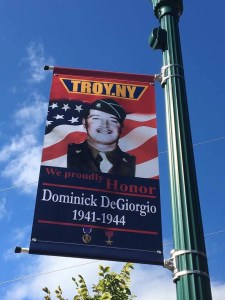
IMG_3970Some of you have already read, on more than one occasion, a series of posts about my grandfather’s brother Dominick. He was a hero to his adopted country of America, being killed in action in World War II, right before the end of the war. His loss left a gaping chasm in my family at the time, and he is still a hero to us today.

My cousin and I recently had crafted a military banner in his name, with his image flying high and proud in the city where I live, where he lived as a proud American citizen. As long as our family is here, we will never forget.

But Dominick was far from the only member of his family that emigrated to our shores. His brothers came here as well, and they were special in their own right.

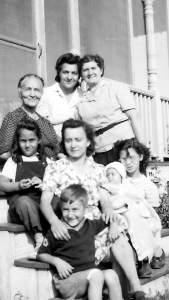
My grandfather himself (Sebastian, pictured below to the right) has long been a featured topic on this site, with several articles that remain my favorites. He was one of the toughest guys I knew, and this was just not my opinion – the other men he knew, whether family or friend, verified his relentless nature and resolve.

The image I love – one that stays with me like it happened yesterday – is of him during one of our tragically brutal winters, shoveling snow with a steel handled shovel and no gloves to protect his hands. Dressed in an overcoat and fedora.

Over coffee on a recent Sunday morning, my cousin Mary told me a story that I didn’t know about my grandfather – or “Pop,” as I would call him. My cousin said that a fire had started in their first floor flat, in a living room area that was quickly getting out of control. Like, within minutes, all was going to be lost.

IMG_4197

Instead of the fire department coming to the rescue, “your grandfather came flying down the stairs (my grandparents lived on the second floor) and put the fire out – with his bare hands.” She added, almost as an afterthought, “I think he used a couple of small, wet towels. Or a blanket or something.”When I had thought I heard it all about my grandfather, I sat there holding my coffee cup, my mouth agape, mind in disbelief.

“Ho. Lee. Shit.” was all that I could say.

IMG_3975Another brother was Antonio, who I referred to as “Uncle Tony.” As tough as my grandfather was, Antonio’s brute strength stood out. Capable of tilling huge gardens and planting trees and bushes with the most rudimentary tools, he was as powerful a man as they come. He personified his Calabrian roots with his farming ability, and was responsible, along with his brothers, for planting much of the food that we would later eat.

He would make a point, after his work was over, to rough house with whichever one of us kids was within striking distance. If he said, in his broken English, “come over and give me a kiss,” you did. And got your youthful face scraped by a bearded stubble that felt made of steel.

Mariano, who to us kids was “Uncle Mario,” always captivated with his infectious smile and hearty laugh. If my grandfather was the quiet one – which he was – Uncle Mario was the talker, coming to my grandparents’ house for frequent visits, sitting at the kitchen table for an hour or more to dole out life wisdom and stories from the old country.img_3366

He was the man who taught you how to correctly prune the grape vines in the yard. And when the grapes were down, he’d make a homemade wine that after a glass or two would put you on the couch.

Although he was polite, always well dressed, and soft spoken, turns out Mario was a warrior in a previous life. Fighting for the Italian army in World War II (he didn’t make his trip to America until the early ’60s), he wound up becoming a POW during the war – later escaping and trekking hundreds of miles to freedom.

Hearing that was another “holy shit moment.”

And that’s just the men. The ladies in our family from that generation were even more influential. Working outside the home, but creating the ultimate space for us to grow up in – spending much time making sure the atmosphere was filled with love, warmth, security, and a sense of community. It was an amazing time.

“God, it’s such a drag when you’re living in the past” – Tom Petty

Italian American Podcast co-founder Dolores Alfieri said something while interviewing a guest that immediately hit me like a ton of bricks, stating her feeling about being raised Italian American:  “It was almost like I had a superpower.” 

As much as I would have to disagree with the Tom Petty lyric quoted above (I get a kick out of frequently visiting the past), I agree with Dolores without hesitation. It was a super power. You were safe, secure, surrounded by strength, integrity, passion, and values. You were loved.

It was a feeling, at times, of invincibility. You were bulletproof.

You can tell me that’s in the past. Those days are over.

For the most part, you would be right. The past is gone.

But those super powers remain. Ready to be summoned at any time, to serve you and those around you as well. It may not be like mine – being raised as an Italian American by a family whose best interests were your interests – but you have your own. You just have to call on it. Or discover it, if you have not yet.

In this time of violence, vitriol, and what some may call “a graceless age” – it would be great for all to believe – friends, family, children, the people that mean the most to you.

It’s especially for my kids. I want my son and daughter to know they have it as well. Although they’re both at an age where self doubt can creep in like an insidious force, they can call on their superpower. Like Superman type strength, or Flash like speed, they have it.

It’s the Sicilian in them, the Calabrian. It courses through their veins.

You can, in the finest moments, feel invincible. Unstoppable.

I know you can because I still feel it myself. In my heart, mind, and best of all, my memory of the past.

Like this article? Please share on your favorite social media channel. Or better yet… read some more, with the related content below. What’s your “superpower?” Let everyone know by leaving a comment!

More Than a 3-Day Weekend – Remembering a Soldier’s Story

In upstate New York, our summer season is greatly anticipated – if only to erase the meteorological memories of bitter winters and wet, cool springs. Traditionally, our official kick off is Memorial Day.

This year, our family will follow a familiar route – driving up I-87, also known as the Northway, into the heart of the scenic Adirondack park. Specifically Bolton Landing in the Lake George region.

0A01C300-B963-432A-91F3-B26D2175D0E7Although it looks as if this rainy spring will hang on at least one more weekend, with uncooperative showers and chilly winds, the party will go on for all of us. In the past, we’ve consumed enough clams to warrant renaming the weekend Clam-a-palooza.

Everyone will have their fun, including our small group in this small town. But we call it Memorial Day for a reason. It’s more than a three day weekend – the meaning can run much, much deeper.

Years ago, a friend of mine put it succinctly in a social media post:

“Happy Memorial Day”. That statement doesn’t make sense to me at all. Today is a day of reflection for selfless sacrifice both past and present. I am not celebrating. I am remembering.

We have a special soldier in my immediate family – PFC, and former member of the 105th Infantry, Dominick DeGiorgio.  He was my grandfather’s brother. After surviving the brutal fire fights in the D-Day invasion of Normandy, he was later killed in action in Germany in World War II, still a young man. As far as I know, he is my family’s only recipient of the Purple Heart.

Another brother, my great uncle Mariano, fought for the Italian Army during European campaigns. It seems incomprehensible now, but there was true potential in that war for brother v. brother, each fighting, shedding blood, for their country.

Even though Dominick was killed well before I was born, I felt I knew him through countless stories from my grandmother. While my grandfather Sebastian was a man of few words, his brother had a huge personality despite his small stature.

IMG_4397A good looking guy who was always laughing and in good humor, he was, as my Nonna would state, very popular with the ladies. So much so that he would draw big crowds of them at the ice cream shop where he worked before going off to war.

I still wonder what it would have been like to have him here, and the impact he could have had on our lives. His bright and cheerful persona as counterpoint to my own grandfather, the “strong, silent” type. What fun we could have had with that.

The great war ensured we would never know. As for many other families, the battle for freedoms takes away as it gives, and erases what could have been.

He gave it all, fighting for the next generations of Americans with, as my friend said, “selfless sacrifice.” I’m sure there were plenty of disappointed girls at the ice cream window at Manory’s store.

The battles are faded history. Many have forgotten.IMG_3581

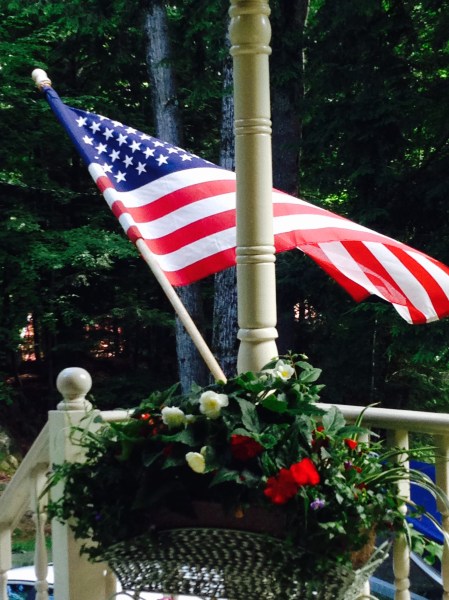
I’m happy I’ll have the opportunity to sit on a porch on  what may be a stormy May afternoon, to reflect and wonder about a man whose brief  life and unending potential were taken away far too soon.

Dominick DeGiorgio took part in the D-Day invasion of France, and earned a bronze arrowhead for his campaign ribbon. He also participated in Operation Market Garden, where he was KIA on September 17th, 1944. For his service on the continent of Europe, he earned the following decorations:

Combat infantryman badge, bronze star medal, Purple Heart medal, European – African – Middle Eastern campaign medal with bronze arrowhead and two bronze service stars, WWII Victory Medal, New York State Conspicuous Service Cross (and Star).