Paul McCartney, First Dates, Faith in the Desert: the Intersection of Tradition, Love, and Hope

During a recent broadcast of the Saturday Night Live 50th anniversary special, former Beatles frontman Paul McCartney and his band performed an iconic Beatles medley to close the show.

The medley concludes with this lyric from “The End”:

In the end, the love you take is equal to the love you make

Love, as represented here, looks to not be just a romantic notion. It represents acts of love – whether toward neighbor, friends, and your fellow man.

McCartney has described this line as a philosophical reflection on reciprocity and love. It suggests that the amount of love and kindness you receive in life is directly proportional to the love and kindness you give.

In short, a poetic expression of emotional karma—what you put into the world, especially in terms of love, is what you ultimately get back.

McCartney has said that he wanted to leave listeners with something uplifting and meaningful, which he did without doubt.

Is this type of love in short supply, which is something we have been led to believe? Are the talking heads right? Will we, ultimately, experience nothing but division and hate?

Begin With Your Roots

Love begins with a base. In my opinion, that base begins early with an immersion into traditions, and the continued practice of those traditions.

As many of you know, my traditional bent runs deep into Italian American culture.

As my wife and I sat at our dining room table, eating the last of the meatballs made over a recent weekend, she presented a theory that I would have thought, in the past, sacrilegious.

The dish we had, prepared in our kitchen, just didn’t compare with the ones our beloved Nonna had made.

They may have surpassed them in texture and taste.

Like I said, absolutely sacrilegious.

There’s only one way that could have happened.

A rapt attention to, and practice of, the traditional way of life that I was raised with.

You could say that encouraging a traditional, or old-school, way of thinking has been hyper politicized recently.

As if those of us that appreciate ways of traditional thinking or lifestyle are closed minded to new ideas or concepts.

I would disagree.

Traditions are enhanced via experimentation. The aforementioned food on my plate, while drawn from my grandmother’s decades of experience in the kitchen, was not strictly her recipe.

We (my wife and I) dared to experiment.

Would my Nonna – who I admired almost more than anyone – would she have approved of this experimental bent?

Since it was a labor of love, I think yes.

A New Beginning

Well over 30 years ago, my wife and I sat across from each other at a romantic table at a new restaurant called LoPorto’s.

The table was close to a dimly lit bar area, but elevated to another level looking over that small space. She was not yet even my girlfriend. It was our first date.

I don’t remember what we ate that night, but I do recall the restaurant was without a beer and wine license. No matter. The owner, Michael, was good enough to give us glasses of his own homemade wine, pouring us a robust red to go with our traditional Italian meal.

It was then my wife began her immersion into the traditions of my world. One that would lead her to the kitchens of my grandmother and godmother, into the recipes of love that were a staple of my upbringing.
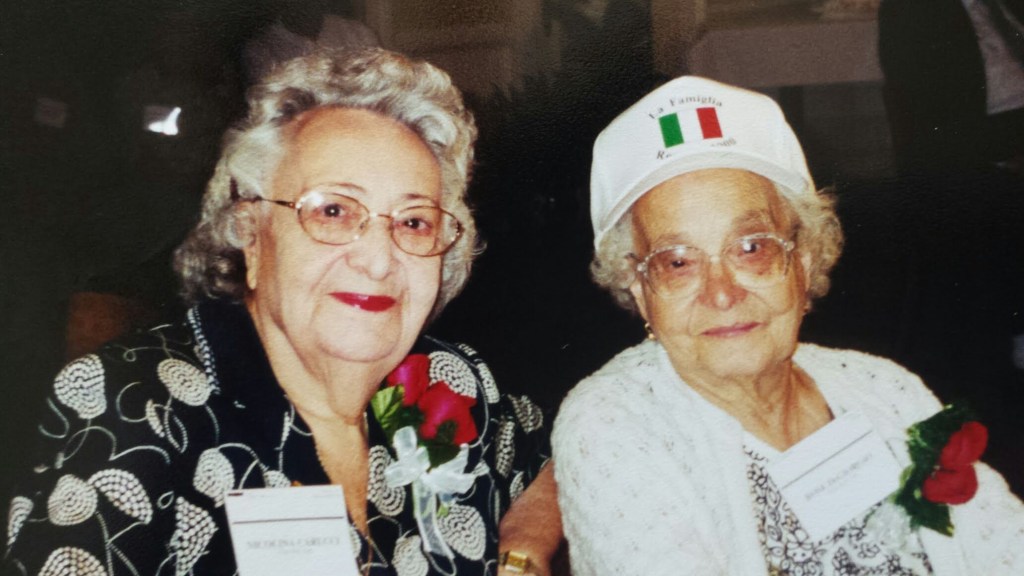
She did so until just before the end of their earthly lives, when they could no longer cook or teach. But the lessons had been passed.

The girl who sat across from me in LoPorto’s was now the woman who embodied the spirit and love of tradition of two old Sicilians. Traditions that were flickering embers that now burn bright in our little kitchen.

The Ultimate Act of Hope

Earlier this spring, Roman Catholic faithful around the world observed the period of Lent, leading up to Easter Sunday.

The origins of Lent detail a wandering Jesus in the desert, spending 40 days there while fighting off temptation and His demons.

That 40 day journey of Jesus can be seen as the ultimate act of hope – a powerful testament to trust, otherworldly endurance, and purpose.

Without support or comfort, Jesus enters the desert alone. This solitude is not one of despair, but a hopeful retreat. He has to endure fasting, struggling against temptation, waging war against Satan himself.

The desert symbolizes a crucible where His hope is refined. Jesus emerges not broken, but empowered – and prepared for His mission.

The desert experience is not just personal – He walked through the heat and sand for all of us. In McCartney’s concept, taking no love but giving all.

With love, tradition, and hope, we are shown that even in our own deserts – our trials, doubts, and temptations – there is a way through.

In the end, the love you take is equal to the love you make.

Thanks to McCartney, a timeless maxim to live by.

Like this article? There are almost 150 more like it on this site. Browse around! Please share on your favorite social media channel. For additional articles, see the related content below, and to be notified of future posts, please enter your email in the space provided.
Of Bats and Men: Tales of a Blue Collar Renaissance Man

Bats, perhaps undeservedly, have a bad reputation.

Portrayed in media and movies as fearsome, blood draining predators, being wary of bats in your midst is a common theme for just about all of us.

But, bats are beneficial to us in many ways. According to the U.S. Fish & Wildlife service:

“Bats play an essential role in pest control, pollinating plants and dispersing seeds. Recent studies estimate that bats eat enough pests to save more than $1 billion per year in crop damage and pesticide costs in the United States corn industry alone. Across all agricultural production, consumption of insect pests by bats results in a savings of more than $3 billion per year.”

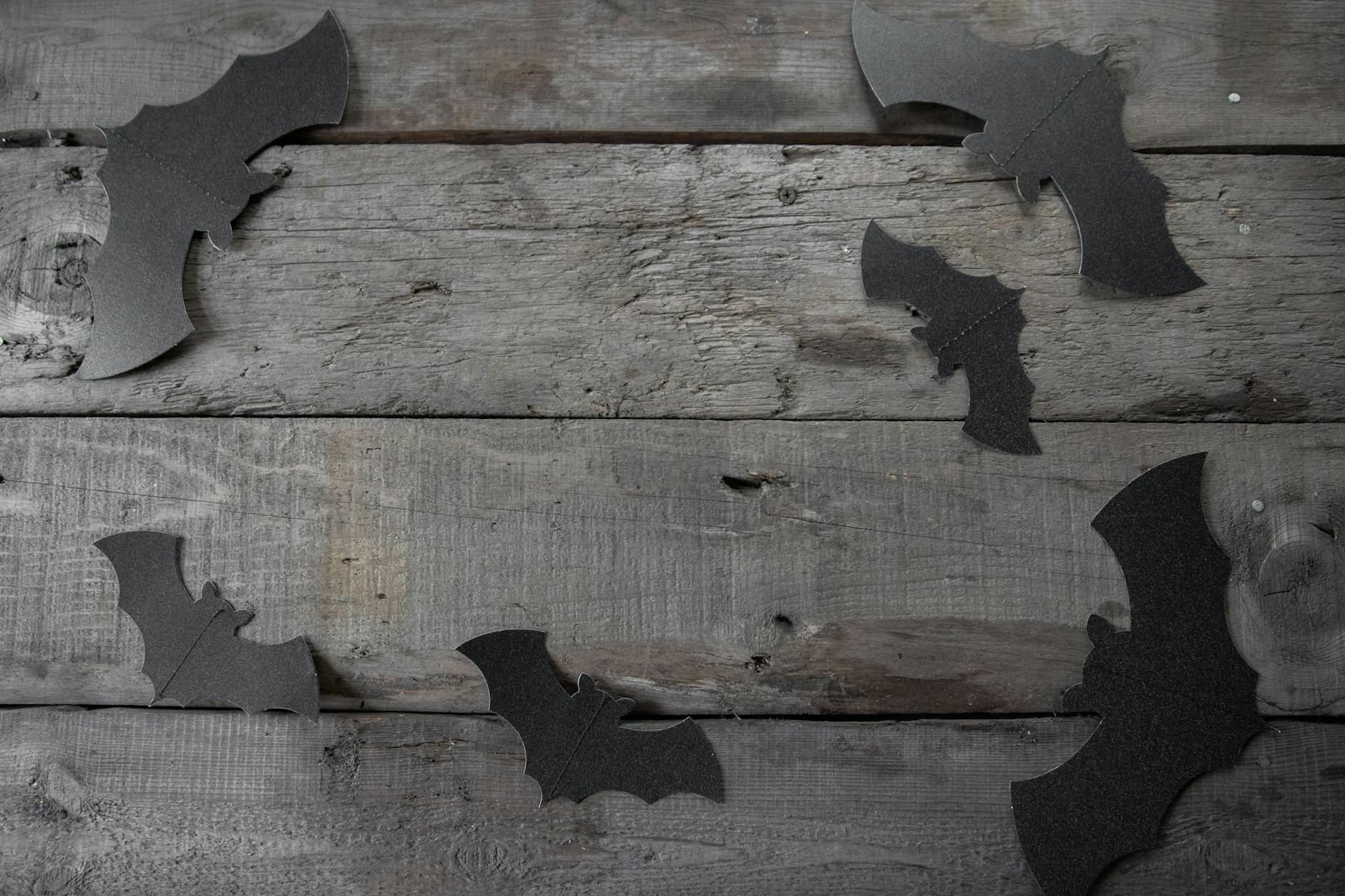
Photo by Monstera Production on Pexels.com

My grandfather wasn’t having any of that. More than a few years ago, when we both worked in the family restaurant, a bat made it’s way from an upper floor of the building to the ground floor to, per his view, become a menace to employees and customers alike.

Before the bat could get to the dining room, my grandfather picked up a broom, and with one well timed swing, knocked the bat out of the air to the ground, stunning it.

Before it’s composure could be regained, he flipped over an old bucket, trapping it underneath. At that point, I thought, “great – he’s going to bring the bucket outside, letting the critter back into the wild.”

But, that wasn’t quite his plan.

Instead of following a humane “catch and release” plan, the man I called “Pop” flipped the bucket off the bat, while in the same motion swinging the broom down, smashing the bat against the floor.

Not once or twice, but several times, to my youthful horror. His plan all along.

Protection of family, property, and customer – especially the ones eating my Nonna’s pasta e fagioli in the dining room.

Aside from his violent tendencies toward nocturnal, flying mammals, my grandfather was a work and family centric man with a kind heart that matched his efforts. Other than protecting kin and customers from bat intrusions during a meal, he exhibited so many other skills.

My grandfather was no one-talent specialist. He was a true renaissance man, of the blue collar variety.

******************

A clogged toilet in need of attention? It was no match for him. Fixed in a jiffy.

Someone flushes their dentures accidently down the same said toilet? No matter. Toilet taken apart, dentures saved.

Industrial dishwasher doesn’t meet the temperature requirements to pass a health department inspection? Watch his plumbing and electrical skills go to work. No match for my grandfather.

Frantic call from his sister-in-law that an electrical outlet in the house is on fire? No need to call for help! Fire out, damage limited – no match.

Need to grind, by hand, ten loaves of bread in 15 minutes so my grandmother can make meatballs? Again, no match.

Need to work an eight hour shift at the factory, then another shift at the family restaurant? Six days a week? Time and hard work were no match for my grandfather. He went through physical work shifts like a buzzsaw.

Settling in a foreign land, with no grasp of English, and taking every dirty job that not many would take, so that you could provide for your family? No dirty job could match him.

As I wrote previously, coming to America was just the first step at the bottom of the hill. He was relentless in his ascent up the mountain of the American dream.

That dream must have looked impossible to a man whose English was rough, and came to the USA with primarily physical skills.

His was the story of thousands of Italians who emigrated to these shores, to the land of hope and dreams for sons and daughters to follow.

*******************

The recently late, great songwriter Kris Kristofferson was an artistic renaissance man. Elon Musk has transformed more than a couple of industries on the technology side. My grandfather Sebastian survived and thrived in America with his ability to adjust and adapt to any situation.

There were times in his life that I’m sure he thought the odds were insurmountable. You would have never known from his demeanor. He was a straightforward, stoic guy that always seemed to be on a mission. His mission: survival and success, at all costs.

He was, and is, one of my heroes.

Thank you Anthony Prezio for the initial inspiration for this article. The memories we’ve brought up together have made me laugh, reflect, and feel grateful.

If you liked this article, please share on your favorite social media channel. For additional articles, see the related content below.

I Was “Lou Gehrig” Lucky – Growing Up Italian American in the 70’s

I couldn’t have been much more than seven, eight years old. It was another sparkling summer day in my grandparents’ yard, playing ball with my friends. We had makeshift bases to simulate a baseball diamond in that expansive space, and I was charging hard around them after a drive to the “outfield,” near the fence, heading for home plate.

Trying to score a run, I slid feet first into home, unaware of a rock protruding from the ground near the makeshift base. During the slide, the rock gashed the skin inches from my ankle bone.

From there, the memory of this sixty year old me is a little cloudy.

I don’t recall if the injury was serious enough to warrant medical attention, or just a quick tape job to stop the bleeding.

I saw my Zio Mariano (“Uncle Mario”) in the front yard, and hobbled over, calling out to him to check out my wound. The look of concern on his face said it all: this kid’s hurt!

I don’t remember any trips to the hospital that day, but his look of concern covered all the bases (pardon the pun): whether a small cut or something in need of stitches, it was Uncle Mario to the rescue.

And that’s the way it always was as I was growing up – no matter the trouble a younger me got into, I was sure an Italian immigrant would have my back.

Luckiest Man

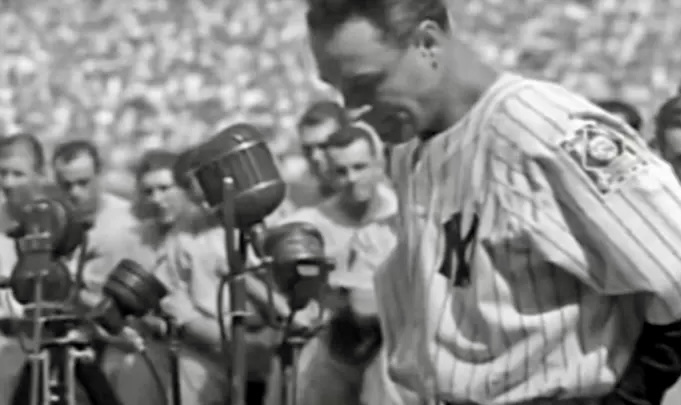
Most history buffs and baseball aficionados are familiar with the story of Lou Gehrig. A star first baseman for the Yankees – known as the “Iron Horse” for his 2,130 consecutive-games-played streak – he is perhaps most famous for the disease that bears his name: ALS, or amyotrophic lateral sclerosis.

Later to be known as “Lou Gehrig’s Disease.”

You may also remember grainy black and white film footage where he uttered these famous words at a home plate retirement ceremony at Yankee Stadium: “For the past two weeks you have been reading about (my) bad break. Yet today I consider myself the luckiest man on the face of the earth.”

He knew the possible ramifications of his illness, but faced it with an attitude of appreciation for all that life had given him.

A Lucky Childhood

Baseball was always a metaphor for the sun soaked days of my upbringing – whether it was playing ball with friends (and hopefully not hurting myself), slamming a rubber ball against the rear wall of my grandparents’ brick ranch for hours, or listening to a Yankee game with my grandfather while sipping espresso on the back patio – baseball came to symbolize several of the many facets of growing up surrounded by Italians.

My lucky streak was colored not just by my grandparents, and my rescuer Uncle Mario, but also by many others: my other great uncle Antonio, farm boy strong, capable of overturning a huge rototiller on his own.

My grandmother’s sisters, Carmela and Nicolina, the latter shaping a great deal of my later life.

The great uncle I never met, Dominick, killed in action during World War II, but always a living legend whose stories I heard frequently back in the day.

Lucky charms included not only being part of a tight knit family, but also growing up in a tight neighborhood.

You could do nothing on our street – and I mean nothing – without the ladies across the way, Katie Germano and Carm Muscatello, knowing about it and sharing the intel with the rest of us.

Little ol’ me, left, flanked by my parents. My grandparents, across the table, were never far away.

I was lucky to learn the importance of work ethic from them all. To be part of picnics with insane amounts of food.

Being able to sip homemade wine in my youth (cue Uncle Mario again!). Gleaning the value of not only work, but relationships and social connections that were rooted at the immigrant experience in our neighborhood.

Time may change me, but I can’t trace time

David Bowie

It’s a lucky streak that I’m not sure families, friends, and connections have now, especially growing up. Whether the obstacles be ever more intrusive technology, or a pandemic that nobody expected, the path can be different.

You might say I was just lucky to grow up when I did.

I drove down that street where I grew up just the other day, and my memories are colored by images that look much different. Various parts of that street are now in decay, my childhood home has graffiti on it, and the shrubs in front of my grandparents’ house have overgrown, now resembling trees.

Is “Lou Gehrig lucky” a bit of an overstatement? Probably. But, it’s all perception as to how you see your life and the fortunes you’ve been blessed or cursed with.

I’ve never stood at home plate in Yankee stadium, but I’ve slid into home plate on a long forgotten summer day in my own magical arena, surrounded by fruit trees and vegetable gardens, with an unparalleled support system looking on.

And that was always good enough for me.

Like this article? There are 145 more like it on this site. Browse around! It would be helpful if you could share on your favorite social media channel. For additional articles, see the related content below, and to be notified of future posts, please enter your email in the space provided.

7 Italian Concepts That Can Change Your Life

No question about it – as I was mentored and shaped by my Italian family, on my dad’s side, the more entrenched I became in the culture: that way of simple living, traditions, and style that they brought with them from the motherland.

As I’ve grown older, and almost all of those family members have passed on, I now find myself obsessed in the thought of holding that way of life, although in our modern life it’s a challenge to do so.

Hanging around my Nonna on such a frequent basis – usually sitting at the kitchen table, sipping coffee – gave me much exposure to her creeds, her frequent sayings: some of her favorites were “Life is precious,” “it’s later than you think,” and “life is worth living,” among others.

She was a font of wisdom and common sense for me growing up, and as I moved through my 20’s and 30’s, no doubt molding me and forming my own values without me even realizing it.

For that reason, quaint old school, Italian sayings have a special place in my heart and more than likely always will. I recently discovered some others that resonated with me, shared with me by those who have a similar proclivity and passion for Italian culture.

I’m happy to share with you.

Chi va piano, va sano e va lontano.

“He who goes slowly, goes safely and goes far.”

Be patient. Take things at a steady pace. Success, happiness, and wellbeing can be yours in the long-run. Consistency is more important than intensity.

L’appetito vien mangiando.

“Appetite comes with eating.”

Sometimes you have to start something to find the motivation to continue.

Begin, and it will come. Don’t wait for enthusiasm to strike.

Non tutte le ciambelle riescono col buco.

“Not all donuts come out with a hole.”

Not everything will go according to plan.

Accept the things that turn out differently than you hope.

Situations are not always perfect – most are less than perfect.

But even donuts without a hole can still be damn good.

La vita è bella.

“Life is beautiful.”

You don’t need life-changing milestones to experience joy. All of my older relatives that emigrated here lived, and enjoyed, a simple life.

They noticed the little things: that first sip of coffee, a long laugh with loved ones.

Italians know how to savor the moment.

Chi dorme non piglia pesci.

“He who sleeps doesn’t catch fish.”

Successful people always show up-even on the days they don’t want to.

Rewards are earned, not given. You can’t expect results if you’re idle.

In this realm, my grandfather was my greatest role model.

Meglio soli che male accompagnati.

“Better alone than in bad company.”

(Choose wisely.) You are the average of the 5 people you spend the most time with.

The surest sign of confidence is someone who is comfortable being alone.

A tavola non si invecchia.

“At the table, one does not grow old.”

(And time seems to stop.) The best meals are cherished and savored in the company of others.

The quality of your relationships determines the quality of your life.

Good food and conversation will keep you young.

That last one, a tavola non si invecchia, resonates with me more than the others. Gathering around the table for a shared meal or glass of wine is a sure fountain of youth – flashes of my childhood, adolescence, and beyond are abundant at table, whether sitting with family and friends.

Depending on the dishes served, especially when we host, our table resembles that of a decade that is long past, with it’s flourishes of love, comfort, and abundance.

Credit to my colleague Mark Friedlich, who was good enough to share what I’m sharing with you.

Like this article? Please share on your favorite social media channel. For additional articles, see the related content below. To be notified of future posts, please enter your email in the space provided.

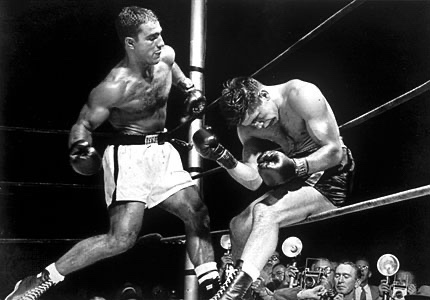
Shoemaker’s Son: How Rocky Marciano Ignited Italian America

As a boy, I vaguely remember the older Italian men, inside and outside my circle, having discussions of famous athletes of the day, and their inspiring rise to fame.

No doubt you’ve heard of some of them.

Names like Berra, Williams, Rizzuto.

Mantle. DiMaggio.

One that stands out in particular was Rocky Marciano. If the name sounds unfamiliar, he retired as the undefeated heavyweight boxing champion. I grew more curious as I heard the name Marciano in those influential circles.

To describe his rise to glory to that pinnacle as unlikely would be a kind assessment.

Unlikely to survive illness as an infant.

Unlikely to escape the factory life that consumed his father’s life.

Unlikely to become great in a brutally physical sport with his raw, limited skills.

With one sledgehammer of a right hand, the unlikely story no longer resembled a fairy tale, but the ignition of a suppressed culture and an inspiration to millions of immigrants looking for a ray of light, a shred of hope.

An American with Italian roots became heavyweight champion.

According to a piece by writer Al Bruno in La Gazzetta Italiana:

(Marciano) achieved the unthinkable and unimaginable to become boxing world champion. “Get out of this factory and be somebody important,” Marciano’s father, Pierino, a native of Abruzzo, would repeatedly urge and remind his oldest son: fueling him emotionally to do something “special” and rid himself of oppressive factory work and imminent poverty. Young Marciano feared poverty most for his parents and he wasn’t going to let that happen.

I often compared the physical and mental makeup of my grandfather, Sebastian, to Marciano: a short, compact frame, always moving forward, in a relentless space of grit and determination.

Like my grandfather, Marciano’s work ethic may have been the single determining factor in the successes of his life. According to Bruno, “Marciano was on a ‘no-lose’ mission to achieving greatness and he did so by simply out-working and out-conditioning all foes.”

Marciano, remarkably consistent and disciplined, spent hours in the gym, sparring, performing hundreds of push-ups and sit-ups, and putting at least seven miles of roadwork a day.

Similarly, Sebastian performed his jobs like a man possessed: as any true Calabrian would.

As Stanley Tucci described his Calabrese grandparents in his best seller, Taste“my grandparents left the extreme poverty of Calabria and… knew nothing but labor. All of that labor was dedicated to survival and creating a life with only the most minimal of creature comforts. Nothing went to waste, and luxuries were unheard of.”

Sebastian, as well as my Sicilian grandmother, went through a similar arduous journey.

I’m unsure if my grandfather was at all influenced by Marciano. He was a man of few words and many deeds. A true representative of the “old-school” way of thinking.

I do know that he, after finishing a shift at the factory, would quickly move to our family’s first restaurant, Jack’s in Troy: a bartending shift awaited, to occupy his night.

Was he, in fact, under a subtle influence of the Friday Night Fights of the day? Watching boxers struggle to the apex of the maximum fifteen rounds, as he fought through never ending hours of shift work?

I’d like to think that, in a quieter moment, he stood behind that bar capturing renewed inspiration, watching the athletic struggles of the small screen.

Marciano, against all odds, became heavyweight champion, igniting a culture into social prominence. Sebastian became the champion of his family, determined to leave the poverty of Calabria behind.

For me, and others in our family, he transformed himself from a poor Italian immigrant into the heavyweight of our times.

Like this article? Please share on your favorite social media channel. For additional articles, see the related content below. To be notified of future posts, please enter your email in the space provided.