Of Bats and Men: Tales of a Blue Collar Renaissance Man

Bats, perhaps undeservedly, have a bad reputation.

Portrayed in media and movies as fearsome, blood draining predators, being wary of bats in your midst is a common theme for just about all of us.

But, bats are beneficial to us in many ways. According to the U.S. Fish & Wildlife service:

“Bats play an essential role in pest control, pollinating plants and dispersing seeds. Recent studies estimate that bats eat enough pests to save more than $1 billion per year in crop damage and pesticide costs in the United States corn industry alone. Across all agricultural production, consumption of insect pests by bats results in a savings of more than $3 billion per year.”
Photo by Monstera Production on Pexels.com

My grandfather wasn’t having any of that. More than a few years ago, when we both worked in the family restaurant, a bat made it’s way from an upper floor of the building to the ground floor to, per his view, become a menace to employees and customers alike.

Before the bat could get to the dining room, my grandfather picked up a broom, and with one well timed swing, knocked the bat out of the air to the ground, stunning it.

Before it’s composure could be regained, he flipped over an old bucket, trapping it underneath. At that point, I thought, “great – he’s going to bring the bucket outside, letting the critter back into the wild.”

But, that wasn’t quite his plan.

Instead of following a humane “catch and release” plan, the man I called “Pop” flipped the bucket off the bat, while in the same motion swinging the broom down, smashing the bat against the floor.

Not once or twice, but several times, to my youthful horror. His plan all along.

Protection of family, property, and customer – especially the ones eating my Nonna’s pasta e fagioli in the dining room.

Aside from his violent tendencies toward nocturnal, flying mammals, my grandfather was a work and family centric man with a kind heart that matched his efforts. Other than protecting kin and customers from bat intrusions during a meal, he exhibited so many other skills.

My grandfather was no one-talent specialist. He was a true renaissance man, of the blue collar variety.

******************

A clogged toilet in need of attention? It was no match for him. Fixed in a jiffy.

Someone flushes their dentures accidently down the same said toilet? No matter. Toilet taken apart, dentures saved.

Industrial dishwasher doesn’t meet the temperature requirements to pass a health department inspection? Watch his plumbing and electrical skills go to work. No match for my grandfather.

Frantic call from his sister-in-law that an electrical outlet in the house is on fire? No need to call for help! Fire out, damage limited – no match.

Need to grind, by hand, ten loaves of bread in 15 minutes so my grandmother can make meatballs? Again, no match.

Need to work an eight hour shift at the factory, then another shift at the family restaurant? Six days a week? Time and hard work were no match for my grandfather. He went through physical work shifts like a buzzsaw.

Settling in a foreign land, with no grasp of English, and taking every dirty job that not many would take, so that you could provide for your family? No dirty job could match him.

As I wrote previously, coming to America was just the first step at the bottom of the hill. He was relentless in his ascent up the mountain of the American dream.

That dream must have looked impossible to a man whose English was rough, and came to the USA with primarily physical skills.

His was the story of thousands of Italians who emigrated to these shores, to the land of hope and dreams for sons and daughters to follow.

*******************

The recently late, great songwriter Kris Kristofferson was an artistic renaissance man. Elon Musk has transformed more than a couple of industries on the technology side. My grandfather Sebastian survived and thrived in America with his ability to adjust and adapt to any situation.

There were times in his life that I’m sure he thought the odds were insurmountable. You would have never known from his demeanor. He was a straightforward, stoic guy that always seemed to be on a mission. His mission: survival and success, at all costs.

He was, and is, one of my heroes.

Thank you Anthony Prezio for the initial inspiration for this article. The memories we’ve brought up together have made me laugh, reflect, and feel grateful.

If you liked this article, please share on your favorite social media channel. For additional articles, see the related content below.

Unity is Unlikely: Here’s What We Should Do Instead

It’s been said, in many circles, that we stand a country divided.

At least, that’s what you hear if you pay close attention to the mainstream and fringe news media, or the cable talking heads: we are divided, and we need desperately to heal.

Years ago, I made a decision to follow the lead of author Tim Ferriss, and adopt what he called the low information diet. It is exactly how it sounds. The crux of it is to ignore news outlets for the most part, to not let them dominate your day or your psyche. He suggested, to still remain an informed citizen, scanning newspaper headlines on your way to work or running errands, or engage someone in conversation, asking, “what’s new in the world today?”

His interest lie in seeing how much information another person could relay back to you: what they retained after a morning or afternoon of being influenced by what Don Henley coined “dirty laundry.”

I Got the News Today, Oh Boy

I was pretty faithful to this way of life until the pandemic hit: when we all felt a civic duty to become more informed. Starting innocently enough with updates on case numbers, data and statistics. Which might segue into the evening national news, which would supplement COVID driven information with other bad news.

Pretty soon, you find yourself drowning in news content, going down the slippery slope of fear and despair. Exactly the plan, to rivet your attention to marketing to follow: so you can be sold pharmaceutical drugs, household cleaners, and new Toyotas.

Make no mistake, the primary function of the news is not to inform, but to sell.

Happily, I’m awakening from my stupor. Slowly weaning myself from it’s devil’s grip, and as future corona case numbers head south and vaccines are more prevalent, I’ll expect a cold turkey sabbatical: to watch for one reason only, as Paul Simon said, “getting all the news I need from the weather report.”

But lingering doubts driven by the talking heads still remain: are we divided, and what can be done about it?

I Don’t Need No Civil War

As you may expect, our political leaders call for unity. To some of us, these requests smack of pure rhetoric. Why unity? In their eyes, it equals votes. The objective is to ensure securing votes at any cost, to the end of making sure few changes transpire during the election cycle. Securing the thirst for power and influence they covet.

Having said that, let’s end there, with the attempt to keep this post as apolitical as possible.

Is unity, a unified human nation, a probable goal?

I’m going to say no. With so many differing ideologies, cultures, and beliefs – some probably instilled at a very young age – mass unity is a far fetched dream that will always elude us, no matter how feverish the chase.

Instead, I offer that we focus on what sales leaders call the low hanging fruit (i.e., sell the easiest deals first before moving to bigger challenges), or what legendary coach Vince Lombardi would refer to as the blocking and tackling fundamentals.

Let’s instead focus on increasing our civility towards one another. It’s not unity, but it goes a long way to creating a better time.

The type of civility I refer to is an example I was shown growing up: Italian immigrants, who although discriminated against and often with a challenging path up their personal mountains, still managed to display class and love for their fellow human being. I’m certain, at times, it wasn’t easy for them. But damn, they sure made it look easy.

The answer to my self imposed questions were clear: if they could do this, with lives that began in this country as an unquestioned fight for survival – why can’t we, while we’re enveloped in our lives of (mainly) modern comfort and convenience?

If you’re at all interested in more civility (I realize some of you may not be, and that’s OK; I’ll make a concerted effort to steer clear of you in public), there are many ways to increase awareness on how you treat your fellow human being, and as the immigrants did, display a little class in most every situation. I’ll highlight a couple.

Gimme Three Steps

Earlier this week, my company launched their annual sales kick off, albeit virtually. Although we missed the travel, and seeing friends from around the country, it was still worthwhile. There’s always a great keynote speaker, and 2021 was no exception: Shawn Achor, an author known for his advocacy of positive psychology, delivered the speech.

Amidst his citing of research and science, he emphasized to live with more purpose and feel happier, it helps to spend a minute each day thinking of three things you can be grateful for.

Just three things.

I’m taking this exercise to heart. My things today, that I noted in long hand earlier, included our recent polar vortex temperatures (yeah, it sucks at first: but man, you eventually feel alive!), vaccines (our parents with their first doses this week. Yay!), and push ups (brutal to perform at times, but I appreciate the fact that I can probably do more than most other 57 year old men).

To think of, and write this down, took all of five well spent minutes.

Secondly, it may also help to temper your social media consumption. Zuckerberg’s creation initially dubbed the facebook was a way for college students to stay connected, but has morphed into a behemoth, a poison well of easily shared false information. Compared to the rolling vitriol of Twitter, the facebook seems like a viewing of Mary Poppins, however. Take the poison of your choice.

Having said that, there are positives to social media: you just have to filter, sort, and curate your way to a better online experience. I’ll lose patience with that never ending battle, instead focusing on what I can share myself that might lift someone’s day. Which is something my Nonna taught me is pure civility.

Once you do modify social habits, if you choose, you may find an increase in positivity is apparent – a step forward to helping decrease the temperature of your own life.

Sure, things still piss me off. Absolutely. There was a time not so long ago I was a perfect candidate for anger management intervention.

However, it’s harder to be pissed when you’re not bludgeoning yourself over the head with the latest news, or falling down the social rabbit hole. The gratitude habit, however cliched, always helps, as well as exhibiting patience in stupid situations.

You’ll find as you lower the temperature, that it’s easier to have a measured conversation, avoiding shouting and hyperbole. Levels of empathy increase, as you find yourself standing in someone else’s shoes. You may, although you don’t agree with it, actually respect another’s opinion.

Wow moments, am I right?

Lowering the temperature doesn’t have to be hard. It can be radically simple: remembering that we can all think of each other as members of the same flawed human race, and aren’t really all that much different, despite what we perceive as differences.

Barriers can be broken down if you want them to be.

Like this article? Please share on your favorite social media channel. For additional articles, see the related content below, or connect with us on Facebook. To be notified of future posts, please enter your email in the space provided.

Our “New” Normal Might Look a Lot Like My “Old” Childhood: a Post Lockdown Opinion

Although the exact quote escapes my memory, New York Times columnist Frank Bruni referenced a colleague or friend who said something along the line of “feeling silly about past complaints of waiting in a crowd, for an exorbitant amount of time, for a table at a busy New York City restaurant.”

The reference went on to mention that, in these strange times, what a pleasure it would be to waste your time waiting like that once again.

It’s funny how all of us have taken for granted the mundane moments of perceived inconvenience: a long grocery line, or a crowded restaurant.

Or even worse, taking for granted the good stuff: a hug from a friend or loved one. That meal out, once the wait was over. The anticipatory buzz of the crowd right before a concert or performance.

With a viral pandemic has come a lot less of what we had, but perhaps more of what we need. As the curve flattens, and cases keep declining, the new anticipation and buzz will be looking to the future, how we should navigate it, what some are calling a “new normal.”

To me, that normal could look a lot like the mid 70’s, seguing into the decade of the ’80s: what I perceive to be simpler times, less convoluted lives, and the return to focus on what’s important, rather than the unessential.

A Better Life with Less?

If you’re like me, you’ve been driving less. No commute, and making trips that are only absolutely necessary.

Speaking of trips, there may be less travel overall. Although my wife and I had targeted 2020 for an initial trip to Italy, and canceled a March trip to the west coast of Florida, I wonder aloud: will we stay closer to home now?

img_1594
A favorite northbound road trip

Less car travel should mean less traffic. Less road induced stress. Easier trips when taken. Less pollution, with cleaner skies. A renewed appreciation for the road trip, as it’s being taken less frequently .

There should be less brick and mortar recreational shopping. More thought put into what we do buy. Less consumer consumption, and jostling hostility during silly holiday sales.

I know this may be just a crazy dream, but how about a little less political strife? Maybe a little more listening to your fellow human being without judgment and angry rebuttal.

While we’re on the subject of more, what could we expect more of?

Much of it, as far as I can see, looks like a throwback to a well spent youth.

What There Should Be More Of

There should be more gratitude. If virus related death or illness has not yet invaded your inner circle, praise your good fortune. Praise the fact that when your feet touch the floor in the morning, you will have another day.

If prayer is your thing, participate in more of that. It can only help.

When there is a return to normal, if it’s possible, I predict more heart, more affection. As an Italian American, it destroys me to not be able to hug family and close friends. Kiss them on one cheek, or both.

I’m not wired this way, and my guess is you’re not either. I can’t wait for my first rib crushing hug from a friend when it can happen.

There’s going to be more genuine communication. Maybe this is showing my age, but I find myself picking up the phone more to talk, rather than just shooting over a text or a social media update.

In the same vein, more neighborhood socializing is becoming prevalent, as we go outside with any opportunity to leave the house, weather permitting.

We’ve been sitting on a neighbor’s concrete backyard patio recently – properly distanced, imbibing in a drink or two, sharing recent family news or well recalled memories.

If there is a throwback to the old days, this point would be it. In a neighborhood rife with Italian immigrants, the tight knit social network was the end all, be all of their American lives.

On a sunny morning or afternoon (yes, here in the Northeast, they are becoming more frequent!), my wife and I will spend time on our back deck. Thank God for the deck, and the music that accompanies it. Music lovers to begin with, we’re listening much more than we used to, complimenting the isolation situation.

Music is the language of sanity during times of strife and stress. Enjoy more, more, more of it, absolutely guilt free.

More time outside equals more movement: whether you prefer a walk around the neighborhood, running, yoga, or simple play, it’s all good. If music is the language of sanity, movement and exercise is the translation.

There is a trend already burgeoning toward growing more of your own food. As an article at reuters.com recently noted:

People around the world are turning to gardening as a soothing, family friendly hobby that also eases concerns over food security as lockdowns slow the harvesting and distribution of some crops. Fruit and vegetable seed sales are jumping worldwide.

img_1574
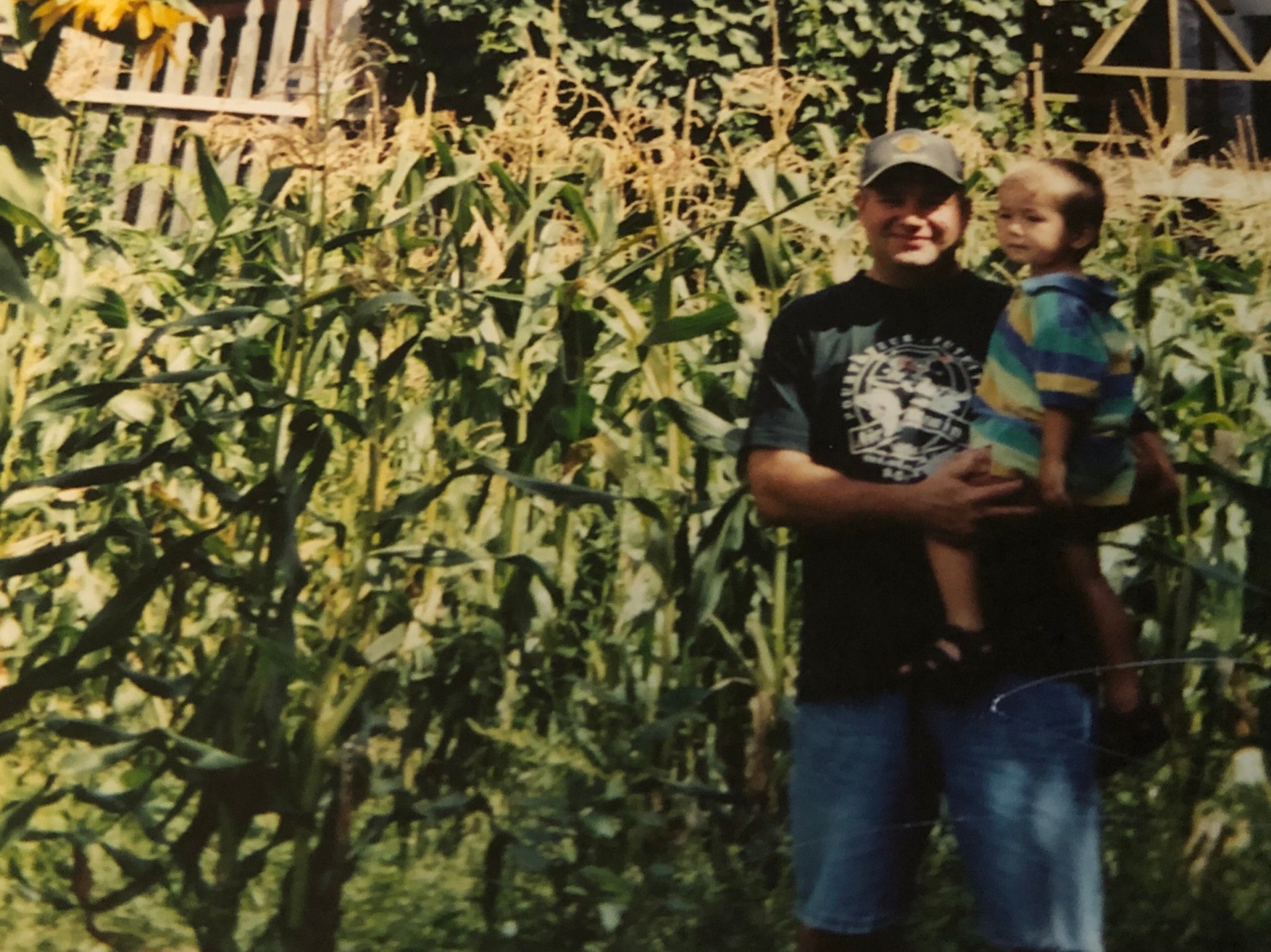
My son and I in front of my grandmother’s massive vegetable garden – seems like a lifetime ago.

Watering and mowing the area around the numerous fruit trees and vegetable gardens at my grandparents’ house is a cherished memory. If growing food is a trend, well, the Italian immigrants were the original trendsetters. Pears, cherries, corn, peaches, zucchini, tomatoes, beans, basil – back in the day, we had it all.

Apparently, this way of life is making a long overdue comeback.

Where some of us may be looking to grow our own food, the concrete trend we can point to is everyone is now, for better or worse, cooking their own food.

Restaurants, surviving on a pivot to providing optimum curbside take out and delivery service, may finally open soon. But a 25% occupancy may be all that’s allowed at first, to enhance social distancing and safety protocols.

I wonder aloud, yet again: when the openings happen, how many of us will show up?

Do you really want to sit at a table, being approached by a waiter who needs to pull down his N95 mask to say “May I take your order?”

I don’t know about you, but I may be waiting awhile to inhabit my favorite restaurants.

img_1063_original
Pan fried meatballs in our kitchen, just like the old ladies used to make.

We’ll basically keep doing what we’ve always done: cook the majority of our meals ourselves, in our own kitchen.

While no slouches in the kitchen to begin with, we’ve taken our normal cadence of food prep to another level – especially my wife, whose furlough from her job has given her an abundance of time to take it there.

The constant activity in the kitchen is the thing that most reminds me of my childhood: one Sicilian or another would always be in the kitchen cranking out dishes that would provide calories, sustenance, and most importantly, the comfort and connection we craved.

That sense of connection is needed more now, to carry us through uncertainty that we face.

When we’re in the kitchen together, the outside world is banished.

Aromas permeate the house that bring back the cooking sessions of my childhood, where I was just an observer.

They bring back the conversations with my grandmother, memories of great aunts and uncles now gone. The stories told, lessons learned.

It’s relaxing, energizing, comforting. Just the tonic we need to bring us through the pandemic age.

Like this article? Please share on your favorite social media channel. For additional articles, see the related content below, or connect with us on Facebook. To be notified of future posts, please enter your email in the space provided.

The System was Rigged Against Them – But it Didn’t Matter

The system was rigged against them – but it didn’t matter.

The system only accepted immigrants physically – as they drifted into Ellis Island, New Orleans, San Francisco – but, the acceptance ended there.

Your skin tone, your faith, your language was not accepted.

Even the President of the United States scoffed as immigrants made their way to these shores.

Once here, the system was surely rigged against those that didn’t speak, or struggled with, English.

For those with a rudimentary education, the system was, without a doubt, rigged. They hadn’t a chance in the world.

Immigrants that possessed basic skills that would have them take the most dangerous work for menial pay were sitting ducks for this rigged system. Many would fall ill, suffer serious and debilitating injuries, and death.

The system was rigged if you had no one in America that came here previously, to gain early knowledge about the system. Your edge, your advantage, equaled less than zero.

The system was rigged with prejudice, bigotry, and savagery that few remember, but many experienced. In their declining years, many immigrants still felt the sting of undeserved hatred.

As author Ed Falco states:

“The decades go by, they turn into centuries, and we forget. We’ve forgotten the depth of prejudice and outright hatred faced by Italian immigrants in America.”

Yes, the system was surely rigged. But it didn’t matter.

As we go about our work-a-day worlds in this modern age, everyone faces obstacles, many of them self created. The mundane tasks we share threaten us, challenge us, and for the entitled among us, hurt our feelings.

We, for the most part, do not have to scrape by. To face the challenge of not understanding a language. To face unyielding bigotry on a daily basis. To not be accepted by a system that you willingly left your home for to be part of.

When challenges come up in your life or mine, we should remember what we don’t have to face in our day to day. We should remember that no matter the obstacle or challenge, we basically wake up into the lap of luxury every morning.

Are there exceptions to this rule? Absolutely. Many suffer in this country, in this world. We should always remember that.

IMG_4916But I can’t think of myself in any other way but privileged, as my immigrant family set it up that way for me – looking “the system” square in the eye, and after decades of unwavering persistence, the system backed down.

Like a dog, running down a grimy city street, tail tucked between its legs.

The system was no match for the gritty, determined immigrants that inhabited our past, and now color our dreams.

The system was rigged against them. It didn’t matter.

Like this article? Please share on your favorite social media channel. Or better yet… read some more, with the related content below. To be notified of future posts, please enter your email in the space provided along the right sidebar.

And… leave a comment! We love reading them!

Fantastic Voyage

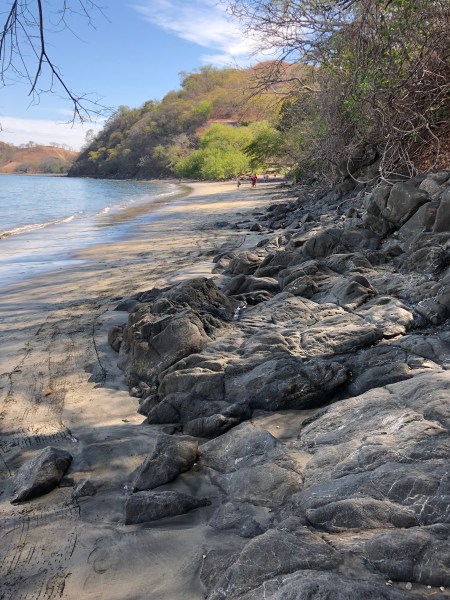
As I walked through the sand, hand in hand with my wife, I noticed my feet turning black – like I had stepped through piles of ash after remnants of a roaring wild fire.

The sand itself was unlike those of other Caribbean beaches that I had walked, the color and texture being somewhat strange.

img_0067Looking to my left while walking, rock formations jutted out, in front of the hill side where our hotel resort was perched. The rocks looked blacker than the sand: as I learned later, the result of thousands of years of volcanic ash and lava covering the rocks and forever changing their appearance.
Some of the names are Poas, Irazu, Turrialba, Rincon de la Vieja, and lastly, Arenal – widely known as one of the most beautiful volcano sites on earth.

Costa Rica is much more than volcanoes, though. Its topography includes lakes, mountain ranges, jungle terrain, tranquil bays, and the Pacific Ocean. Luckily for us, five star resorts are plentiful as well.

My wife and I were lucky enough to walk this stunning beach, in its bay encased setting with an appropriately hot sun, through a Diamond Club incentive sponsored by the company that I work for.

I say lucky – but more than a couple of people that would say that luck is secondary to the hard work and dedication that it takes to become a Diamond Club winner.

We’re lucky because the two of us absolutely love to travel, and the company gives us ample opportunity to do it on their dime. We would travel anyway, even without the multiple wins that I have – for example, taking the kids on a family vacation last year to the Dominican Republic that was just as sun drenched and breathtaking.

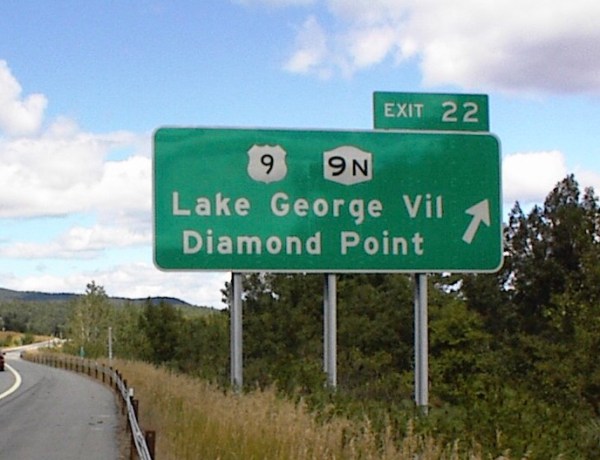
It wouldn’t be hard to refer to all our trips – whether a pedestrian ride up the Northway to Lake George, summer drive to our favorite ocean setting in Cape Cod, or once in a lifetime flight to the west coast of Mexico – as our “fantastic voyages.”

The label not only gives a nod to my sci-fi movie loving past, but reminds me how lucky (there’s that word again) we are to live the life that we do, mostly when we want to do it. I called it luck as I don’t believe any of what we experience is possible without the fantastic voyage that came before us.

Previous readers of articles here know where I’m coming from. Our trips, no matter how exceptionally amazing and satisfying, can’t compare to the importance of that one trip that my family made to come to America – my grandfather’s side coming from Calabria in Southern Italy, my grandmother’s traveling from a small town in Sicily.

img_0050
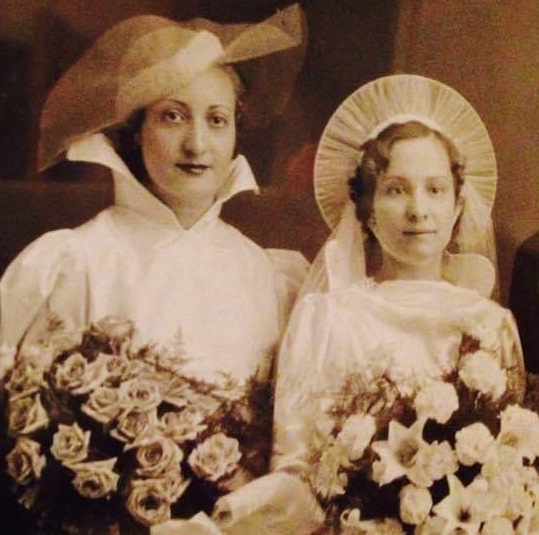
My grandmother, right, on her wedding day in 1936 with my godmother

While our accommodations were five star with great food, wine, and swimming pools complete with spa appointments, my immigrant family enjoyed no such luxuries. Traveling on cramped ships in steerage class with brutal and abhorrent conditions, they came to this country believing what their fellow countrymen believed: America’s streets were paved with gold.

The truth revealed itself to be less than a fairy tale. Most immigrants, Italian or otherwise, spent their time in cramped housing, fighting poverty, and working only the dangerous or repetitive manual labor jobs they were qualified for – if they weren’t the targets of racism or discrimination that shut them out of honest work.

The luck factor for my family was different than mine – they worked and toiled in factory jobs long and hard enough to realize they had buried within them an entrepreneurial spirit, and developed it into successful restaurants: a legacy that allowed us “kids” to work, setting up our own idea of making it happen here.

Looking back, the rewards and accolades of my working life aren’t remotely possible without the complete, complex concept of la famiglia – the luck I experienced having a family that cared so much, to take the time to mold and set the path for their next generation, and subsequent generations to follow.

For that, and our ability to travel so easily as a result, I couldn’t be more grateful.

Leaving for the airport to look forward to nearly a full day of travel home is a bittersweet experience. We’re eager to walk through our back door once again, to see family and friends – but we’re hopeful to bring back some of the sunshine and warmth with us, that we don’t leave it completely behind.

One of our stops on the flight home was to be in Charlotte, once back in the states. The turnaround, only a half hour to begin with, was threatened with a weather forecast filled with thunderstorms. Our good fortune on this trip included a family connection that works for American Airlines, who offered to help re-book our destination to fly home from Miami to LaGuardia in New York.

Once we boarded, a first class flight attendant glided to our economy seats to deliver two glasses of champagne – in celebration of my mid-50s birthday which would be spent in the air, in terminals, in New York City traffic.

Toasting my birthday with the free bubbly would have been more than appropriate – as would have toasting another international trip, or a family member who dedicated himself to getting us home safe, and on time.

The perfect toast, in my mind, now sounds totally different. A glass raised to the end of another voyage, feeling an ultimate gratitude for that very first fantastic voyage.

Like this article? Please share on your favorite social media channel. Or better yet… read some more, with the related content below. To be notified of future posts, please enter your email in the space provided along the right sidebar.

And… leave a comment! We love reading them!