Paul McCartney, First Dates, Faith in the Desert: the Intersection of Tradition, Love, and Hope

During a recent broadcast of the Saturday Night Live 50th anniversary special, former Beatles frontman Paul McCartney and his band performed an iconic Beatles medley to close the show.

The medley concludes with this lyric from “The End”:

In the end, the love you take is equal to the love you make

Love, as represented here, looks to not be just a romantic notion. It represents acts of love – whether toward neighbor, friends, and your fellow man.

McCartney has described this line as a philosophical reflection on reciprocity and love. It suggests that the amount of love and kindness you receive in life is directly proportional to the love and kindness you give.

In short, a poetic expression of emotional karma—what you put into the world, especially in terms of love, is what you ultimately get back.

McCartney has said that he wanted to leave listeners with something uplifting and meaningful, which he did without doubt.

Is this type of love in short supply, which is something we have been led to believe? Are the talking heads right? Will we, ultimately, experience nothing but division and hate?

Begin With Your Roots

Love begins with a base. In my opinion, that base begins early with an immersion into traditions, and the continued practice of those traditions.

As many of you know, my traditional bent runs deep into Italian American culture.

As my wife and I sat at our dining room table, eating the last of the meatballs made over a recent weekend, she presented a theory that I would have thought, in the past, sacrilegious.

The dish we had, prepared in our kitchen, just didn’t compare with the ones our beloved Nonna had made.

They may have surpassed them in texture and taste.

Like I said, absolutely sacrilegious.

There’s only one way that could have happened.

A rapt attention to, and practice of, the traditional way of life that I was raised with.

You could say that encouraging a traditional, or old-school, way of thinking has been hyper politicized recently.

As if those of us that appreciate ways of traditional thinking or lifestyle are closed minded to new ideas or concepts.

I would disagree.

Traditions are enhanced via experimentation. The aforementioned food on my plate, while drawn from my grandmother’s decades of experience in the kitchen, was not strictly her recipe.

We (my wife and I) dared to experiment.

Would my Nonna – who I admired almost more than anyone – would she have approved of this experimental bent?

Since it was a labor of love, I think yes.

A New Beginning

Well over 30 years ago, my wife and I sat across from each other at a romantic table at a new restaurant called LoPorto’s.

The table was close to a dimly lit bar area, but elevated to another level looking over that small space. She was not yet even my girlfriend. It was our first date.

I don’t remember what we ate that night, but I do recall the restaurant was without a beer and wine license. No matter. The owner, Michael, was good enough to give us glasses of his own homemade wine, pouring us a robust red to go with our traditional Italian meal.

It was then my wife began her immersion into the traditions of my world. One that would lead her to the kitchens of my grandmother and godmother, into the recipes of love that were a staple of my upbringing.
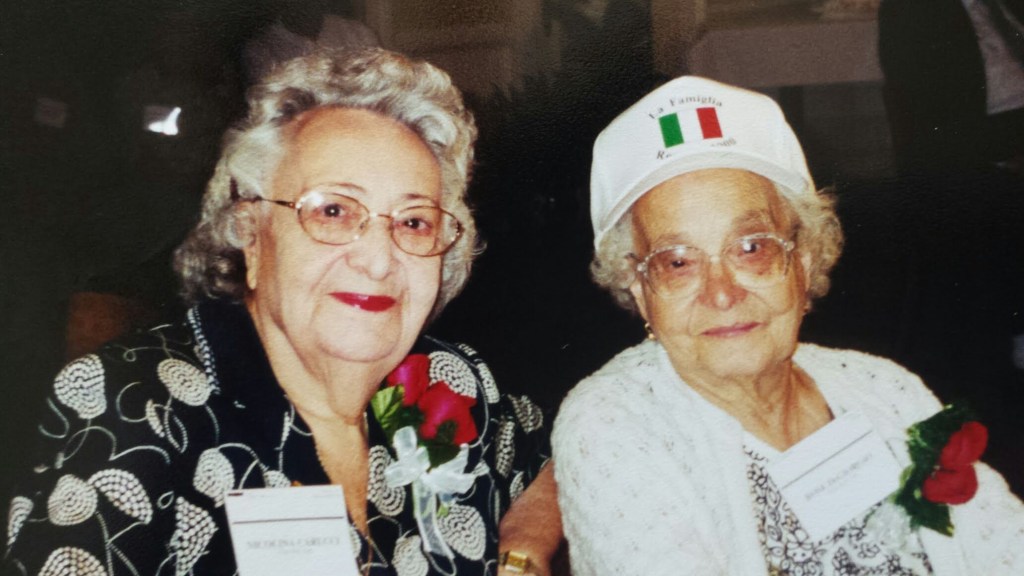
She did so until just before the end of their earthly lives, when they could no longer cook or teach. But the lessons had been passed.

The girl who sat across from me in LoPorto’s was now the woman who embodied the spirit and love of tradition of two old Sicilians. Traditions that were flickering embers that now burn bright in our little kitchen.

The Ultimate Act of Hope

Earlier this spring, Roman Catholic faithful around the world observed the period of Lent, leading up to Easter Sunday.

The origins of Lent detail a wandering Jesus in the desert, spending 40 days there while fighting off temptation and His demons.

That 40 day journey of Jesus can be seen as the ultimate act of hope – a powerful testament to trust, otherworldly endurance, and purpose.

Without support or comfort, Jesus enters the desert alone. This solitude is not one of despair, but a hopeful retreat. He has to endure fasting, struggling against temptation, waging war against Satan himself.

The desert symbolizes a crucible where His hope is refined. Jesus emerges not broken, but empowered – and prepared for His mission.

The desert experience is not just personal – He walked through the heat and sand for all of us. In McCartney’s concept, taking no love but giving all.

With love, tradition, and hope, we are shown that even in our own deserts – our trials, doubts, and temptations – there is a way through.

In the end, the love you take is equal to the love you make.

Thanks to McCartney, a timeless maxim to live by.

Like this article? There are almost 150 more like it on this site. Browse around! Please share on your favorite social media channel. For additional articles, see the related content below, and to be notified of future posts, please enter your email in the space provided.

Right Back Where We Started, Work as Creativity, and “Are You Coming In Today?”

The windshield wipers on our Honda Accord pulsed in rhythmic fashion, clearing a heavy rain from the glass as my wife and I were navigating a roundabout near Hyannis airport.

We were on the hunt for a new place to go, a French bakery near the airport that was said to offer an elevated almond croissant. So, off we went.

It was enough of a challenge to drive in the rain, but it seemed the entire landscape of Barnstable County was replacing sewers, so my challenge was also littered with road closures, construction equipment, and various debris.

As the rain came down harder, my wife quipped, “Well, we’re right back where we started!”

Where we started was 32 years ago as a couple dating, on our first trip to Cape Cod. We happened to pick a week with so much rain that Noah’s ark would’ve begun planning stages.

Did we care? Not really. We were dating, had a hotel room with a sweet fireplace, and were within a stone’s throw of a wine store. We survived.

From that point on, many summer weeks were spent on the Cape. As newlyweds, as parents, we didn’t miss many opportunities. Even during a pandemic year, we weren’t breaking the streak.

As a toddler, my daughter realized she had a disdain for the feeling of sand on her feet, but she toughed it out. At that age, our son rocketed down that sandy beach, running at such a pace that his father couldn’t catch him. What we did catch was a glimpse of his future as an elite runner.

As teenagers and young adults, they still loved those beach vacations with Mom and Dad. The four of us always had fun on the drive over, and it was always the four of us on the beach together.

Now, they’re adults with lives on the move – one, helping so many clients with their mental health challenges, making our world a better place. The other, teaching other humans how to run fast and win the races of their lives.

They can rarely vacation with us now. But, when we see young couples on the beach, with their young ones in tow, we remember.

Now, it’s usually just the two of us. Right back where we started. In the Cape, watching a driving rain dance off the window of a French bakery.

We never did get that almond croissant (sold out), so we got an order of chargrilled oysters instead. That, and another trip with a boatload of memories.

************************

“Do we need more creators?”

That was the question posed in an article by GQ culture columnist Chris Black, in response to a 60 Minutes interview with music producer Rick Rubin.

He went on to say (edited for the purpose of brevity):

Is creativity for everyone? Is it something that can be learned? I’m not sure, but I am sure that everyone doesn’t need to be creative. We have enough creative directors and photographers to last us a lifetime. The memes tell us we need more electricians and less “creators.”

I have always been jealous of people who are good with numbers and spreadsheets. It is a tangible and viable skill. Doctors, lawyers, accountants, and plumbers are all admirable professions.

But because of social media and idea peddlers like music super producer Rick Rubin, young people who just want to film themselves getting dressed and drinking out of Stanley mugs can think of themselves as “creatives.” Meanwhile, there is no shame in being an Excel wizard or a physician’s assistant.

Not everyone is meant to be creative, and that is okay. We should all be proud of what we do.”

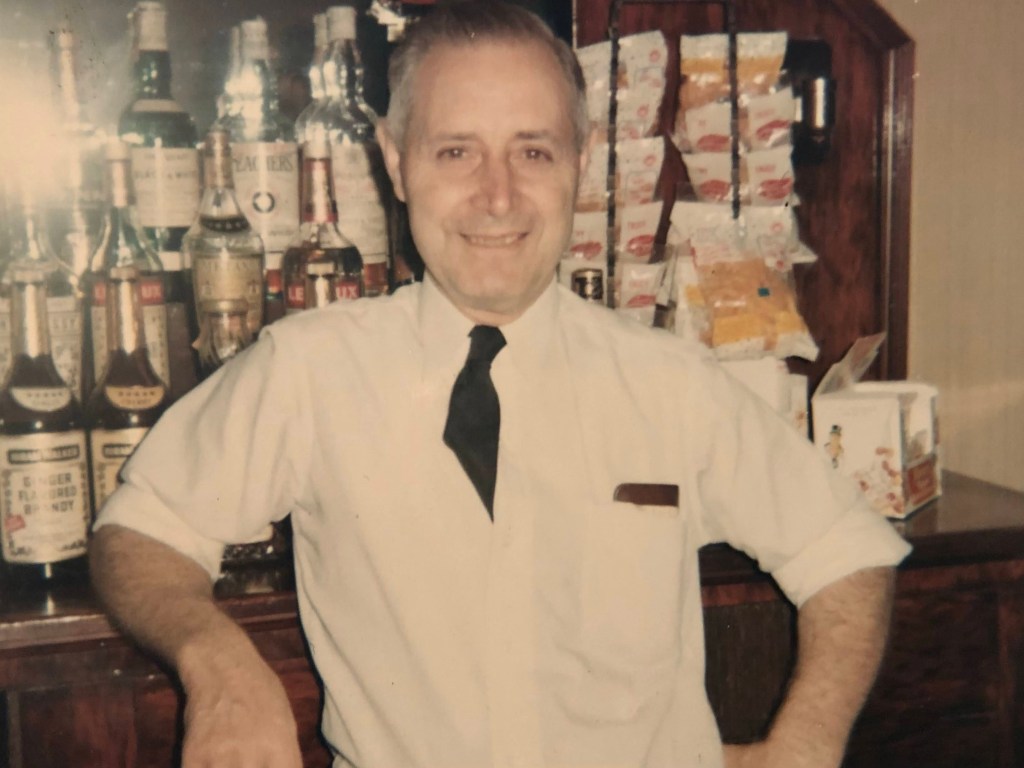
My grandfather, behind the bar of our family’s first restaurant

Black’s article got me thinking of my grandfather Sebastian who, while solely working with his hands, was absolutely a very creative man. He could do so many things with those hands of stone, and with them, created a life here in America and a pathway to success for future generations that he could never have done in his original home of Calabria, Italy.

In my mind, setting up your descendants with an easier path is the highest form of creative work. One that not many accomplish.

He was a true renaissance man – laborer, factory worker, bartender, hotel manager, among others. My generation owes him a debt of gratitude that we can never repay.

***********************

“Are you coming in today?”

It’s the phrase that entered back into my mind as I was discussing happy things with my cousin Anthony at our weekly cousins’ breakfast. He’s about to become a grandfather in September (two times over: twins!), and the subject of paternity leave came up.

(PSA: if you are not sharing a meal once a week with 10 or 12 of your closest relatives, you know not what you’re missing!)

Paternity leave (otherwise known as the Family & Medical Leave Act) is a fairly new offering in corporate America, that gives new fathers up to six months off after the birth of a child. I joked that, back in 1995, I was lucky to get any time.

Being a cog in our family’s restaurant, a small business to be sure, I told him that soon after my daughter was born I’m positive I heard, in a phone conversation, “Are you coming in today?”

In the small business realm, there was no paternity leave. With long hours being the norm in a restaurant, I had to steal moments with my newborn when I could.

Nowadays, I watch younger colleagues in my current job take weeks of leave as their children are born, to help their wives and form those early bonds with newborns that some may say are most critical.

Paternity leave for new fathers makes life easier, no question.

Reading this, you may think I’m a little jealous of the younger generation that can take advantage of such a perk. Yes, I think of what could have been.

But, I have another take.

My children were both born in a time where doing difficult things, and making difficult choices, was commonplace. I actually relished the opportunity to meet a challenge, and I knew my challenges were nothing compared to, say, what my great grandmother faced.

“Are you coming in today?”

Yeah, I’ll be in. I need a few minutes. I’m going to hold my daughter, for just a little bit longer.

Thanks to my cousin, Anthony Prezio, for the nudge to include segment three of this post, and happy birthday month to our daughter, Gabrielle, of whom we couldn’t be more proud.

If you liked this article, please share on your favorite social media channel. For additional articles, see the related content below.

Navigating My 60’s: Living the Contrarian Lifestyle, and Loving It

Literally meaning “to be against,” a contrarian is someone who takes an opposite stance to popular opinion. To have a healthy suspicion of what is perceived as “popular” is a good thing, and I often find myself on the contrarian side. As I’ve gotten older, I have noted that most people do things that others do because of a herd mentality, not necessarily from their own choices.

Occasionally breaking this habit of being contrarian is necessary to enjoy life, of course (i.e. attending a major concert or popular restaurant), but the Sicilian side of me casts a wary eye to the idea of following due to indecisiveness, or just for the hell of it.

This mold of the contrarian mentality began to form in me at an early age – in my middle school years, while my peers may have been listening to the Stones, Beatles, or disco, I was being introduced to the Clash, Van Halen, and the Sex Pistols.

(Disclaimer: I absolutely adore the Stones, Beatles, and….yes, disco!)

Rolling Stones: Wikipedia

In high school, while the rest of the guys in the military academy I attended had short flat top or “high and tight” haircuts, I worked on growing mine out to shoulder length – much to the chagrin of my parents and school administration.

At work in the family business, I noticed the contrarian mentality in action.

While the approved working hours were nine to five in the outside world, my grandmother was often hustling down to the restaurant at 6 A.M. to get a roasted turkey in the oven, and a cauldron of soup simmering on the stove top to serve for the lunch hour rush that same day.

While many men my grandfather’s age (and younger) would be occupying a bar stool during the day, “Pop” never touched a drop of alcohol. There was a business to help run, and he needed clarity of mind. He saw less than that as a weakness.

The examples above proved that although I may have discovered the ability to think differently on my own, it was reinforced by mentors and family members.

img_2584-1

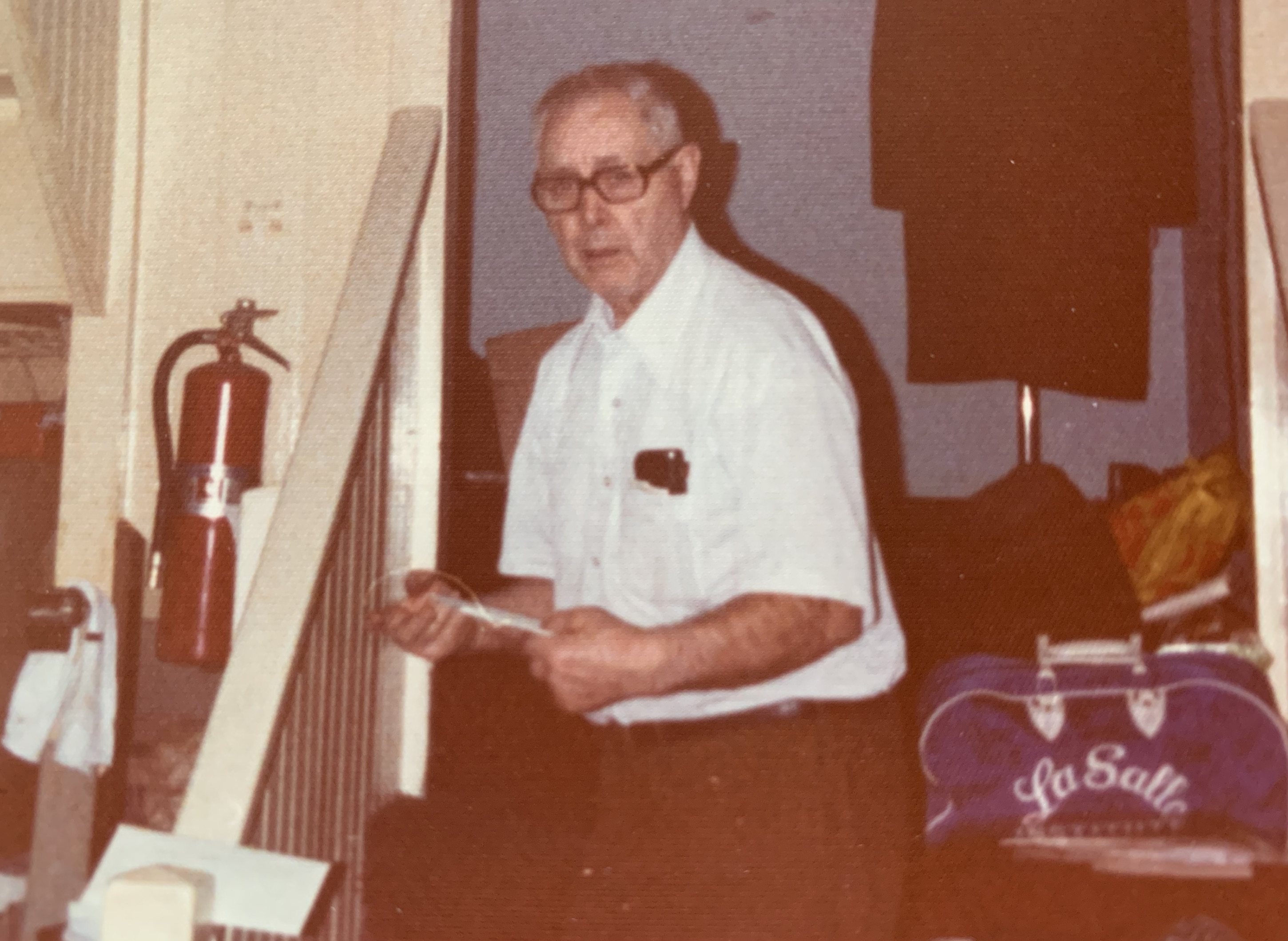
My grandfather, late 1970s

There’s always pressure to live a lifestyle that other Americans embrace, but my grandparents’ generation was different.

When it seemed the world was getting complicated and spinning into chaos, they were happy with a simple existence and singular focus.

Growing Older: New Data, New Opinion

You may notice that when you hit your 50s and 60s, the stakes have changed.

You’ve modified your priorities. You have more confidence than in the past.

You’re not all that concerned with impressing other people. You may not buy things you don’t need, like you used to.

Your idea of success could transform: it’s not unusual for me to feel more invested in my children’s success than my own these days.

“My 60s is my favorite decade of life. When people ask you to do something when you’re in your 60s, you just say ‘no’.” – Jerry Seinfeld

Tapping Age Old Wisdom

My grandparents, my great aunts, (Carmela and Nicolina) and other members of my extended family had a great understanding of what makes life meaningful, and the perception of what became more important as they aged.

As always, I draw from that well of sage advice that was passed to me in my youth, as I grow older.

Your body does not have to break down as you age from neglect. A friend passed along recently the great idea to “rediscover your inner child,” and make room for play. When I was younger, I loved to be outside and run around. So, running has made it’s way back into my life.

I believe the more physical activity you can muster, the better: it helps keep an older body fine tuned, and hopefully retards the aging process.

My Nonna once said: “you stop moving, you die.” She knew the importance of consistent  movement, and understood that’s what the body is constructed for. My best memories of her include the non-stop action in her kitchen, whether home or business.

Her theories may have been old school, but she was rarely wrong.

Like them, as I age, I appreciate experience over material.

For my wife and I, traveling more is important as we get older.  Because we’ve decided that a larger home, unwieldy tax burdens, and new cars just aren’t that important, we find ourselves with a little extra cash to squirrel away for travel.

Nicolina, and earlier in my life, Carmela, practiced this same concept of experience over things, the majority of time on a more local level. As I wrote in a previous post:

Gathering around the table for a shared meal or glass of wine is a sure fountain of youth – flashes of my childhood, adolescence, and beyond are abundant at table, whether sitting with family and friends.

I like to focus on the big things, and forget about the minutiae.  I care about my son. My daughter. My wife. Extended family, friends, my older neighbors. The list of what I care about is brief: the “I don’t give a shit” list is longer, and growing.

I continue to be apathetic in regard to politics (even in an election year) – so a rift forming between family or friends because of political preference is unlikely, and wouldn’t make any sense in my life – much as it makes zero sense in the lives of others.

Nonna loved voting with her gut and instinct, and never missed her opportunity to vote. She even supported a newly elected pope because she “liked his face.”

Her Sicilian instinct moved her to vote for the “better human” in any election, and we like to think we do the same.

Time, flowing like a river

I also have cultivated an understanding of the importance of time: meaning, the time you have left remaining.

This is not what I would think about as a man in my twenties. Time was not a factor.

But now, being appreciative of every moment you can spend with friends and family is of paramount importance.

My time here is finite. Yours, as well.

When that realization really hits home, you understand the significance: what the outside world deems as necessary is bull, and you simply don’t have the time for that.

You don’t necessarily have to be older to enjoy this way of thinking – you can be one of those younger outliers – but there will come a time when a light switch is flipped:

You know exactly who you are.

You know what you stand for, and where your standards lie.

So, if you still want to hop on the bandwagon of a resolution to achieve in this (still) brand new year, I’ve got one for you: spend your time as if that hourglass is running out, and you’re looking right at it.

That’s the contrarian lifestyle in action.

Like this article? There are over 145 more like it on this site. Browse around! Please share on your favorite social media channel. For additional articles, see the related content below, and to be notified of future posts, please enter your email in the space provided.

7 Italian Concepts That Can Change Your Life

No question about it – as I was mentored and shaped by my Italian family, on my dad’s side, the more entrenched I became in the culture: that way of simple living, traditions, and style that they brought with them from the motherland.

As I’ve grown older, and almost all of those family members have passed on, I now find myself obsessed in the thought of holding that way of life, although in our modern life it’s a challenge to do so.

Hanging around my Nonna on such a frequent basis – usually sitting at the kitchen table, sipping coffee – gave me much exposure to her creeds, her frequent sayings: some of her favorites were “Life is precious,” “it’s later than you think,” and “life is worth living,” among others.

She was a font of wisdom and common sense for me growing up, and as I moved through my 20’s and 30’s, no doubt molding me and forming my own values without me even realizing it.

For that reason, quaint old school, Italian sayings have a special place in my heart and more than likely always will. I recently discovered some others that resonated with me, shared with me by those who have a similar proclivity and passion for Italian culture.

I’m happy to share with you.

Chi va piano, va sano e va lontano.

“He who goes slowly, goes safely and goes far.”

Be patient. Take things at a steady pace. Success, happiness, and wellbeing can be yours in the long-run. Consistency is more important than intensity.

L’appetito vien mangiando.

“Appetite comes with eating.”

Sometimes you have to start something to find the motivation to continue.

Begin, and it will come. Don’t wait for enthusiasm to strike.

Non tutte le ciambelle riescono col buco.

“Not all donuts come out with a hole.”

Not everything will go according to plan.

Accept the things that turn out differently than you hope.

Situations are not always perfect – most are less than perfect.

But even donuts without a hole can still be damn good.

La vita è bella.

“Life is beautiful.”

You don’t need life-changing milestones to experience joy. All of my older relatives that emigrated here lived, and enjoyed, a simple life.

They noticed the little things: that first sip of coffee, a long laugh with loved ones.

Italians know how to savor the moment.

Chi dorme non piglia pesci.

“He who sleeps doesn’t catch fish.”

Successful people always show up-even on the days they don’t want to.

Rewards are earned, not given. You can’t expect results if you’re idle.

In this realm, my grandfather was my greatest role model.

Meglio soli che male accompagnati.

“Better alone than in bad company.”

(Choose wisely.) You are the average of the 5 people you spend the most time with.

The surest sign of confidence is someone who is comfortable being alone.

A tavola non si invecchia.

“At the table, one does not grow old.”

(And time seems to stop.) The best meals are cherished and savored in the company of others.

The quality of your relationships determines the quality of your life.

Good food and conversation will keep you young.

That last one, a tavola non si invecchia, resonates with me more than the others. Gathering around the table for a shared meal or glass of wine is a sure fountain of youth – flashes of my childhood, adolescence, and beyond are abundant at table, whether sitting with family and friends.

Depending on the dishes served, especially when we host, our table resembles that of a decade that is long past, with it’s flourishes of love, comfort, and abundance.

Credit to my colleague Mark Friedlich, who was good enough to share what I’m sharing with you.

Like this article? Please share on your favorite social media channel. For additional articles, see the related content below. To be notified of future posts, please enter your email in the space provided.
Unity is Unlikely: Here’s What We Should Do Instead

It’s been said, in many circles, that we stand a country divided.

At least, that’s what you hear if you pay close attention to the mainstream and fringe news media, or the cable talking heads: we are divided, and we need desperately to heal.

Years ago, I made a decision to follow the lead of author Tim Ferriss, and adopt what he called the low information diet. It is exactly how it sounds. The crux of it is to ignore news outlets for the most part, to not let them dominate your day or your psyche. He suggested, to still remain an informed citizen, scanning newspaper headlines on your way to work or running errands, or engage someone in conversation, asking, “what’s new in the world today?”

His interest lie in seeing how much information another person could relay back to you: what they retained after a morning or afternoon of being influenced by what Don Henley coined “dirty laundry.”

I Got the News Today, Oh Boy

I was pretty faithful to this way of life until the pandemic hit: when we all felt a civic duty to become more informed. Starting innocently enough with updates on case numbers, data and statistics. Which might segue into the evening national news, which would supplement COVID driven information with other bad news.

Pretty soon, you find yourself drowning in news content, going down the slippery slope of fear and despair. Exactly the plan, to rivet your attention to marketing to follow: so you can be sold pharmaceutical drugs, household cleaners, and new Toyotas.

Make no mistake, the primary function of the news is not to inform, but to sell.

Happily, I’m awakening from my stupor. Slowly weaning myself from it’s devil’s grip, and as future corona case numbers head south and vaccines are more prevalent, I’ll expect a cold turkey sabbatical: to watch for one reason only, as Paul Simon said, “getting all the news I need from the weather report.”

But lingering doubts driven by the talking heads still remain: are we divided, and what can be done about it?

I Don’t Need No Civil War

As you may expect, our political leaders call for unity. To some of us, these requests smack of pure rhetoric. Why unity? In their eyes, it equals votes. The objective is to ensure securing votes at any cost, to the end of making sure few changes transpire during the election cycle. Securing the thirst for power and influence they covet.

Having said that, let’s end there, with the attempt to keep this post as apolitical as possible.

Is unity, a unified human nation, a probable goal?

I’m going to say no. With so many differing ideologies, cultures, and beliefs – some probably instilled at a very young age – mass unity is a far fetched dream that will always elude us, no matter how feverish the chase.

Instead, I offer that we focus on what sales leaders call the low hanging fruit (i.e., sell the easiest deals first before moving to bigger challenges), or what legendary coach Vince Lombardi would refer to as the blocking and tackling fundamentals.

Let’s instead focus on increasing our civility towards one another. It’s not unity, but it goes a long way to creating a better time.

The type of civility I refer to is an example I was shown growing up: Italian immigrants, who although discriminated against and often with a challenging path up their personal mountains, still managed to display class and love for their fellow human being. I’m certain, at times, it wasn’t easy for them. But damn, they sure made it look easy.

The answer to my self imposed questions were clear: if they could do this, with lives that began in this country as an unquestioned fight for survival – why can’t we, while we’re enveloped in our lives of (mainly) modern comfort and convenience?

If you’re at all interested in more civility (I realize some of you may not be, and that’s OK; I’ll make a concerted effort to steer clear of you in public), there are many ways to increase awareness on how you treat your fellow human being, and as the immigrants did, display a little class in most every situation. I’ll highlight a couple.

Gimme Three Steps

Earlier this week, my company launched their annual sales kick off, albeit virtually. Although we missed the travel, and seeing friends from around the country, it was still worthwhile. There’s always a great keynote speaker, and 2021 was no exception: Shawn Achor, an author known for his advocacy of positive psychology, delivered the speech.

Amidst his citing of research and science, he emphasized to live with more purpose and feel happier, it helps to spend a minute each day thinking of three things you can be grateful for.

Just three things.

I’m taking this exercise to heart. My things today, that I noted in long hand earlier, included our recent polar vortex temperatures (yeah, it sucks at first: but man, you eventually feel alive!), vaccines (our parents with their first doses this week. Yay!), and push ups (brutal to perform at times, but I appreciate the fact that I can probably do more than most other 57 year old men).

To think of, and write this down, took all of five well spent minutes.

Secondly, it may also help to temper your social media consumption. Zuckerberg’s creation initially dubbed the facebook was a way for college students to stay connected, but has morphed into a behemoth, a poison well of easily shared false information. Compared to the rolling vitriol of Twitter, the facebook seems like a viewing of Mary Poppins, however. Take the poison of your choice.

Having said that, there are positives to social media: you just have to filter, sort, and curate your way to a better online experience. I’ll lose patience with that never ending battle, instead focusing on what I can share myself that might lift someone’s day. Which is something my Nonna taught me is pure civility.

Once you do modify social habits, if you choose, you may find an increase in positivity is apparent – a step forward to helping decrease the temperature of your own life.

Sure, things still piss me off. Absolutely. There was a time not so long ago I was a perfect candidate for anger management intervention.

However, it’s harder to be pissed when you’re not bludgeoning yourself over the head with the latest news, or falling down the social rabbit hole. The gratitude habit, however cliched, always helps, as well as exhibiting patience in stupid situations.

You’ll find as you lower the temperature, that it’s easier to have a measured conversation, avoiding shouting and hyperbole. Levels of empathy increase, as you find yourself standing in someone else’s shoes. You may, although you don’t agree with it, actually respect another’s opinion.

Wow moments, am I right?

Lowering the temperature doesn’t have to be hard. It can be radically simple: remembering that we can all think of each other as members of the same flawed human race, and aren’t really all that much different, despite what we perceive as differences.

Barriers can be broken down if you want them to be.

Like this article? Please share on your favorite social media channel. For additional articles, see the related content below, or connect with us on Facebook. To be notified of future posts, please enter your email in the space provided.