Just Who is “Nonna,” Anyway?

As the pace of this blog ebbs and flows, and more posts are added and shared via social, it’s heartening to note that new readers are coming aboard: in fact, there’s more than just a few of you here, enjoying these essays new and old.

With that, it’s justified that I reintroduce the central character in this decade long online story, especially for those of you that might not be intimately familiar.

That character is my grandmother, who my two kids grew up calling “Nonna.”

Rosina Tagliarini, who would eventually become Rosina DeGiorgio by marriage, emigrated to this country in the late 1920’s with her mother and her sisters from a small town in Sicily: Acquaviva Platani, in the province of Caltanisetta.

Escape From Oppression

Unlike many immigrants who came to America to escape poverty, my grandmother’s family had to leave to evade constant threats of organized crime. Her father was specifically targeted, not buckling to kickback and payoff requests: individuals that wanted their share of government warehouse reserves that he protected to ensure local residents were fed and nourished through the war years.
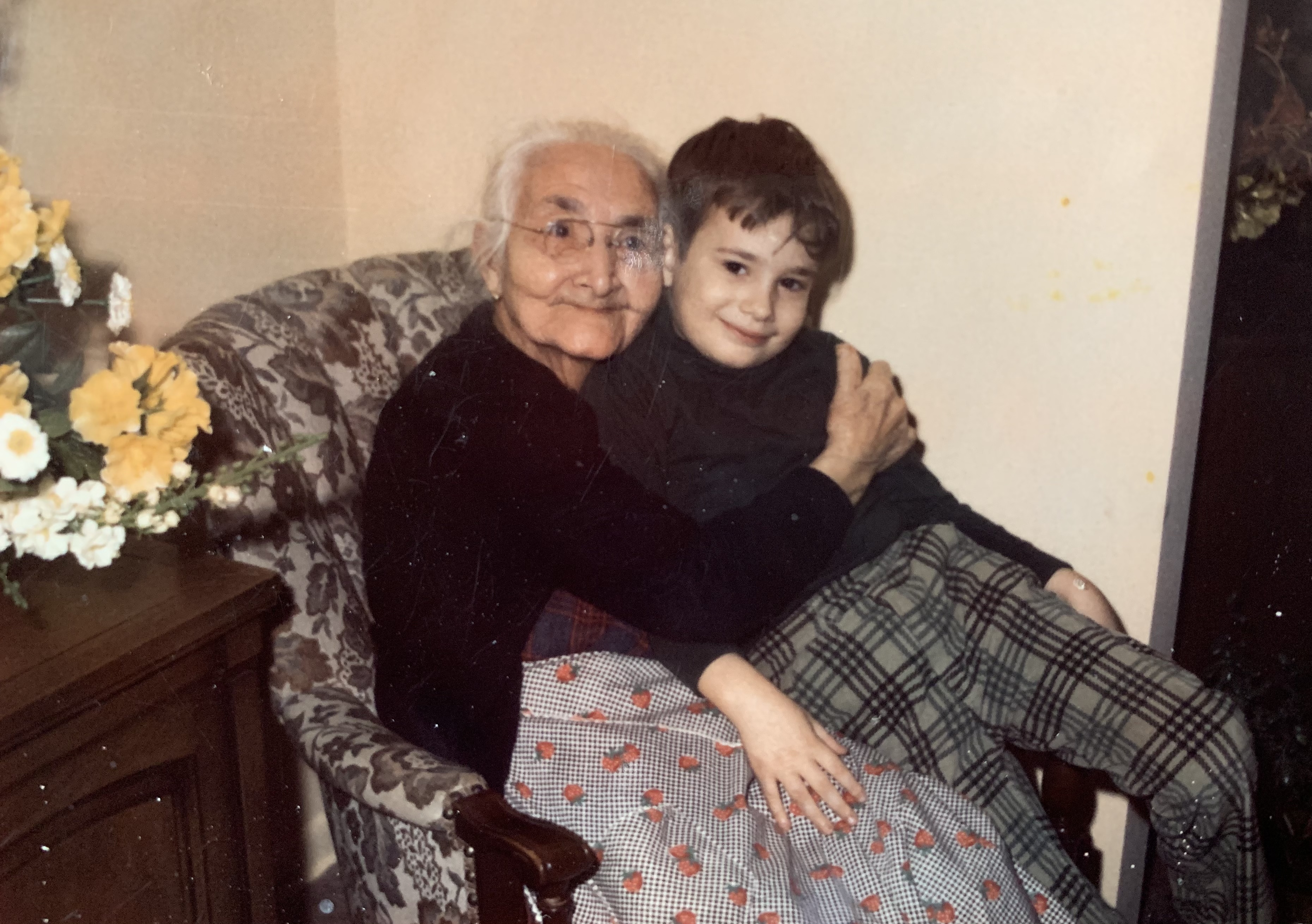
Me, with my Nonna, late 1960s

She came here with her mother, and sisters. Her mother Maria, my great grandmother, was who I called Nonna when I was really young. She held a special place in the home my grandparents had built here in the late ’60s, a modest brick ranch, surrounded by gardens and fruit trees spread out over almost an acre of land.

The family matriarch, she was an ordinary citizen here, but not so in Sicily. She ran an apothecary, known in her small town as a healer. In her later years, I would bring macaroni with butter and cheese to her, with my little six year old hands, as that was all she cared to eat.

My grandmother’s sisters also came here, two of them with notable influence on me, as well: Nicolina, who I dubbed the “Last Sicilian,” and Carmela, who watched after us youngsters with a caring but steady hand during lunch hours (we walked home from elementary school for lunch) and after school.
She also had two brothers, named Lillo and Franco. Fond memories of mine include “Uncle Frank,” who would visit from Italy occasionally, and was my first exposure to a man who I thought was a jet setting world traveler (People could come here from Italy so easily? Amazing!).

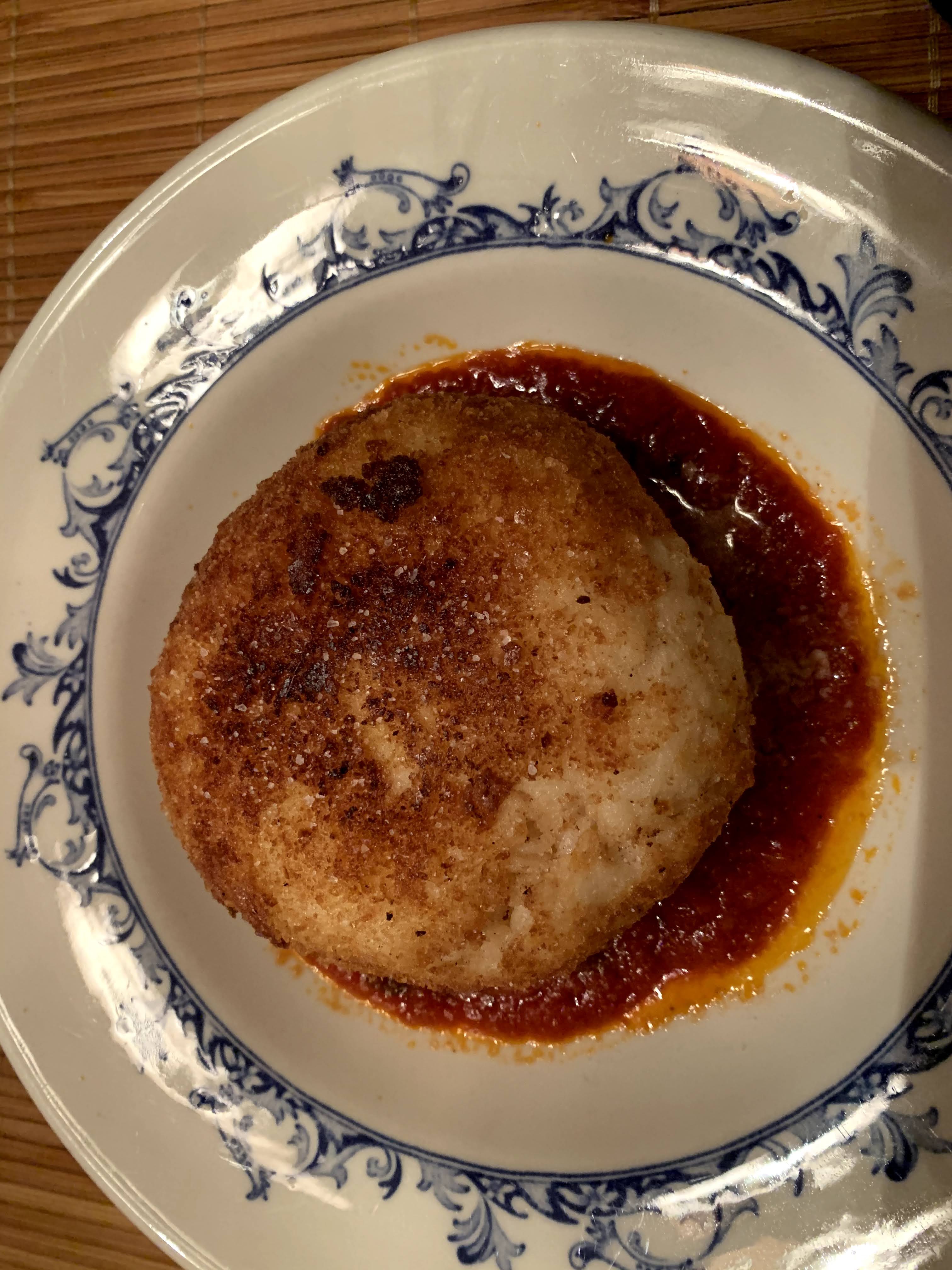
His sister showed how thrilled she was by his visits, rolling out her version of a red carpet. A prolific cook already, my grandmother went full throttle when company was coming. A visit from Franco assured a large number of arancini (riceballs, see photo), a Sicilian street food and family favorite. I’m salivating now, just writing this.

Married With Children

A few years after arriving, she married my grandfather Sebastian DeGiorgio. Their marriage was an ongoing success story, lasting 64 years until his passing in 2000. They had two sons, my father Joe (yup, I’m a junior) and his younger brother Anthony, who died tragically as a teenager months after I was born.

Parents never get over such a life changing event, but Rosina’s strength and resolve to carry on through her grief to provide support to her family was undeniable. It’s one of her traits that I remain in awe of, to this day.

After stints of factory work, what she called “piece work,” she took over sister Carmela’s restaurant in the late 1950s. Known as Jack’s, that was a successful venture for my family for 10 years, until acquiring another restaurant, this time with my dad: the Trojan Tap Room, where I spent 25 years of my working career myself.

Aside from her prowess in a professional kitchen, she was an accomplished home cook as well. For family, friends, acquaintances that dropped by – there would always be an offer of something off the stove, if you were to sit at her table. If nothing else, a cup of coffee and sweet treat was required to have.

Bound to a strong family unit, she had a tight knit group of friends – Mary Marino, Flora DeCurtis, and Maria Commis come to mind immediately. She shared faith centric friendships with these ladies, as practicing her Roman Catholic faith was of utmost importance, in line with the dedication to her family and her life’s work.

She lived a full 96 years, most them robust and energetic. Constant movement was her calling card, at first as survival mechanism (as an immigrant, you’d better have hauled ass), then subsequently as a path to success: expending every shred of energy in support of family.

A recent statement by Pope Francis (who I’m sure she would have loved) summarized it beautifully, and inspired me here:

“It is striking that the Lord spent most of his time on Earth living an ordinary life, without standing out. It is a beautiful message that reveals the greatness of daily life, the importance in God’s eyes of every gesture and every moment of life, even the most simple.

That was her, in a nutshell. Simple life, with every day well spent. Diminutive in stature (under five feet), but with an outsized personality. Her influence is still felt, every day.

Like this article? Please share on your favorite social media channel. For additional articles, see the related content below, or connect with us on Facebook. To be notified of future posts, please enter your email in the space provided.

My “Resolution” – Same As It Ever Was

Cape Cod: October 2020

As waves ripple against the sandy shores of Chapin Beach, I’m sitting on a patio chair on a second story deck, staring out into the Atlantic. With coffee in hand, I shield myself from the early autumn chill by zipping up my trusty Adidas windbreaker. The rest of my dress signals a refusal to let go of summer’s promise: running shorts and bare feet.

It’s a favorite pastime for me: looking out into the ocean’s horizon, watching birds dive bomb the waves, scanning that horizon for boats in the distance. My wife stirs in the kitchen of the beach front house where we’re staying, prepping a breakfast of a protein smoothie or pastry, depending on the mood.

It’s been said that listening to the ocean waves, along with the smell of the sea air, is a great tool for getting your head on straight, bringing you back to center when life may have thrown you off course. It’s a prescription I like to take a regular dose of, without fail.

After breakfast, we’ll take a 30 minute walk along the beach, barefoot in the sand, completing another perfect morning ritual.

A Year Like No Other

This pandemic has throttled most people’s lives into a tailspin, and although there seems to be light at the end of the tunnel, it’s looking like we still have a few months to try to get through unscathed further. If you haven’t fallen ill because of the virus, chances are you’ve been impacted either financially or psychologically, or both.

There have been numerous bright spots. We’ve witnessed a great resolve and resilience from front line workers helping to solve this puzzle. On a personal level I’ve been able to fulfill a goal to work remotely, ditch my commute, and spend additional time with family.

With that last factor, I noted this: the more time I spent with my wife, the deeper into 2020 we got, I felt more confident that days would be better on the other side. Although she doesn’t always see herself in this light, her strength and ability to continue to keep us connected in isolation was a candle burning into the darkness of an unpalatable year.

Strong women have helped shape my life for a long time. She took the baton from the women in my family, notably my godmother and my grandmother, among others. Their influence was similar: in times of strife, their strength was displayed in subtle ways, such as nurturing in the kitchen, providing security, and peppering conversations with hints on how you used adverse situations to become a better person.

Life is precious” and “it’s later than you think” weren’t phrases just tossed around casually: words like that were my grandmother’s mission statement, tinged with life experience of many times of strife, adversity, loss.

The Sicilian immigrant factor is the reason why my one “resolution” at year’s beginning remains the same, and may always: to uphold the traditions of the family that I grew up with, and create new ones with the family I have now. To get better at them, pay homage to them more frequently, little by little.

Get Your Reps In

Throughout the year, my wife exemplified this. With every social connection, every meal prepared, every creative project to make our house an inviting home, we kept long standing tradition in mind, while planting the seeds of new ones to come.

Minestrone, our perfect example of “cucina povera” that my wife has mastered over hundreds of reps

To keep tradition from extinction, whether it be the ritual of forming and frying meatballs, leading your family in a dinner time prayer, or making the best damn coffee (words of a friend) your social group will ever sip; practice, and repetition, makes perfect.

As with anything in life, extending traditions, as well as creating new ones, requires “getting your reps in.” The way my Sicilians and southern Italians did, every day, without fail.

In his book Living With a SEAL, author Jesse Itzler recalled Navy SEAL and extreme endurance athlete David Goggins being asked by acquaintances about a resolution for the upcoming new year. Goggin’s statement was simple:

“I’m going to do the same shit I’ve always been doing. I’m just going to do it better.”

I couldn’t think of a better resolution myself. Happy New Year, friends.

Like this article? Please share on your favorite social media channel. For additional articles, see the related content below, or connect with us on Facebook. To be notified of future posts, please enter your email in the space provided.

Taking Your Seat at the Table

As I pore over the 130 plus blog posts here, I noticed a bit of a trend: the table is a recurring theme, albeit as a metaphor for my life.

It started with tables at my grandparents’ house, eating sandwiches at one great aunt’s table in my elementary school days, and having yet another provide spectacularly simple lunches as I grew older.

Even when there was no food (a rare occurrence), there was always the ubiquitous cup of brewed coffee. A mainstay, and requirement if you were to be seated at my grandmother’s kitchen table for any length of time.

It was a trend, for sure: wherever I went, I was always provided a seat at the table.

In what seems a lifetime ago, my great aunt Nicolina, and her husband Aldo, always invited me as a Saturday afternoon dinner guest in their home. Seated next to my older cousins, and their children, it was always a treat to be invited to what was sure to be an extended period of great food and lively conversation.

Being a teenager, and then in my 20s, these scenes are now distant memories. But I take time to reflect on them often.

Crafting My Seat at the Table of Life

As that teenager, I can say I was a lot like the modern teens of today: at times filled with anxiety and angst, interrupted by periods of thinking I was headed in the right direction.

My relatives did their best to mold me into the man that could easily take a seat at any table, if he wanted to.

I learned many life lessons from my cousins Nancy and Mike at those Saturday dinner tables. They married young, and stayed married for life. They are one of the models on which my own marriage is built.

Mike’s father, Aldo, was an imposing figure, a well spoken Italian immigrant whose military like tendencies made him one of the sharpest individuals I’ve ever met. He provided lessons on how to speak, carry yourself, and dress like a gentleman: going so far as to bring me back expensive Italian dress shirts from his trips overseas.

My great aunt, Aldo’s wife, is well chronicled throughout this site: she was pure class, taught me manners (especially how a man should treat and respect a woman), and showed me the way to enjoying a good life, no matter how simple and basic the means.

Along with my grandmother, on those Saturdays I was the only person not named “Carucci” at that table. I was always made to feel like a special guest of honor, although I was family. In that amazing dining room, I knew I would always have a seat there, for as long as I wanted.

Withstanding the Storms

Fast forward to 2020, especially the last few months, many of us feel like we not only don’t have a chair: but the table, like a rug beneath it, has been pulled out from under us.

Millions of Americans, and people from around the world, feel the same way: my wife and I included. Between health, financial concerns, and fractured relationships, this year – which held much promise at the outset – feels like a Mike Tyson uppercut striking with laser accuracy at the point of our collective chins.

If you’re out there, and you’re frustrated, anxiety ridden, and more unsure of your future than ever before: you’ve got a friend here. I feel you. Like our former heavyweight champ, 2020 is a barrage that won’t stop coming.

But, if I know you – if we are friends, or blood – I also know this: your foundation is strong. Like my own foundation, built with care at dining room and kitchen tables with individuals that now inhabit my fondest memories, yours has resilience and character. The ability to withstand a storm, and punch back.

Decades ago, in an eerily silent Japanese stadium, a relatively unknown fighter withstood the fury of Tyson, absorbing blows raining from everywhere, wearing him down and waiting for his chance to win.

We can retake our seats at the nation’s table with the same approach: withstand the blows as best you can. Reshape your mental framework into one that believes in a brighter tomorrow, outside forces be damned.

Take the focus off of yourself, if possible, and help others who may be struggling even more mightily.

Talk to someone. Laugh with someone. Cook for somebody. Write an 800 word article to show that you care. 😉

Take your seat, because as a child of God, it is rightfully yours.

As my cherished relatives conveyed to a young man so many years ago: that seat will always be there for the taking.

Dedicated to Nancy Carucci (1955-2020)

Our “New” Normal Might Look a Lot Like My “Old” Childhood: a Post Lockdown Opinion

Although the exact quote escapes my memory, New York Times columnist Frank Bruni referenced a colleague or friend who said something along the line of “feeling silly about past complaints of waiting in a crowd, for an exorbitant amount of time, for a table at a busy New York City restaurant.”

The reference went on to mention that, in these strange times, what a pleasure it would be to waste your time waiting like that once again.

It’s funny how all of us have taken for granted the mundane moments of perceived inconvenience: a long grocery line, or a crowded restaurant.

Or even worse, taking for granted the good stuff: a hug from a friend or loved one. That meal out, once the wait was over. The anticipatory buzz of the crowd right before a concert or performance.

With a viral pandemic has come a lot less of what we had, but perhaps more of what we need. As the curve flattens, and cases keep declining, the new anticipation and buzz will be looking to the future, how we should navigate it, what some are calling a “new normal.”

To me, that normal could look a lot like the mid 70’s, seguing into the decade of the ’80s: what I perceive to be simpler times, less convoluted lives, and the return to focus on what’s important, rather than the unessential.

A Better Life with Less?

If you’re like me, you’ve been driving less. No commute, and making trips that are only absolutely necessary.

Speaking of trips, there may be less travel overall. Although my wife and I had targeted 2020 for an initial trip to Italy, and canceled a March trip to the west coast of Florida, I wonder aloud: will we stay closer to home now?

img_1594
A favorite northbound road trip

Less car travel should mean less traffic. Less road induced stress. Easier trips when taken. Less pollution, with cleaner skies. A renewed appreciation for the road trip, as it’s being taken less frequently .

There should be less brick and mortar recreational shopping. More thought put into what we do buy. Less consumer consumption, and jostling hostility during silly holiday sales.

I know this may be just a crazy dream, but how about a little less political strife? Maybe a little more listening to your fellow human being without judgment and angry rebuttal.

While we’re on the subject of more, what could we expect more of?

Much of it, as far as I can see, looks like a throwback to a well spent youth.

What There Should Be More Of

There should be more gratitude. If virus related death or illness has not yet invaded your inner circle, praise your good fortune. Praise the fact that when your feet touch the floor in the morning, you will have another day.

If prayer is your thing, participate in more of that. It can only help.

When there is a return to normal, if it’s possible, I predict more heart, more affection. As an Italian American, it destroys me to not be able to hug family and close friends. Kiss them on one cheek, or both.

I’m not wired this way, and my guess is you’re not either. I can’t wait for my first rib crushing hug from a friend when it can happen.

There’s going to be more genuine communication. Maybe this is showing my age, but I find myself picking up the phone more to talk, rather than just shooting over a text or a social media update.

In the same vein, more neighborhood socializing is becoming prevalent, as we go outside with any opportunity to leave the house, weather permitting.

We’ve been sitting on a neighbor’s concrete backyard patio recently – properly distanced, imbibing in a drink or two, sharing recent family news or well recalled memories.

If there is a throwback to the old days, this point would be it. In a neighborhood rife with Italian immigrants, the tight knit social network was the end all, be all of their American lives.

On a sunny morning or afternoon (yes, here in the Northeast, they are becoming more frequent!), my wife and I will spend time on our back deck. Thank God for the deck, and the music that accompanies it. Music lovers to begin with, we’re listening much more than we used to, complimenting the isolation situation.

Music is the language of sanity during times of strife and stress. Enjoy more, more, more of it, absolutely guilt free.

More time outside equals more movement: whether you prefer a walk around the neighborhood, running, yoga, or simple play, it’s all good. If music is the language of sanity, movement and exercise is the translation.

There is a trend already burgeoning toward growing more of your own food. As an article at reuters.com recently noted:

People around the world are turning to gardening as a soothing, family friendly hobby that also eases concerns over food security as lockdowns slow the harvesting and distribution of some crops. Fruit and vegetable seed sales are jumping worldwide.

img_1574
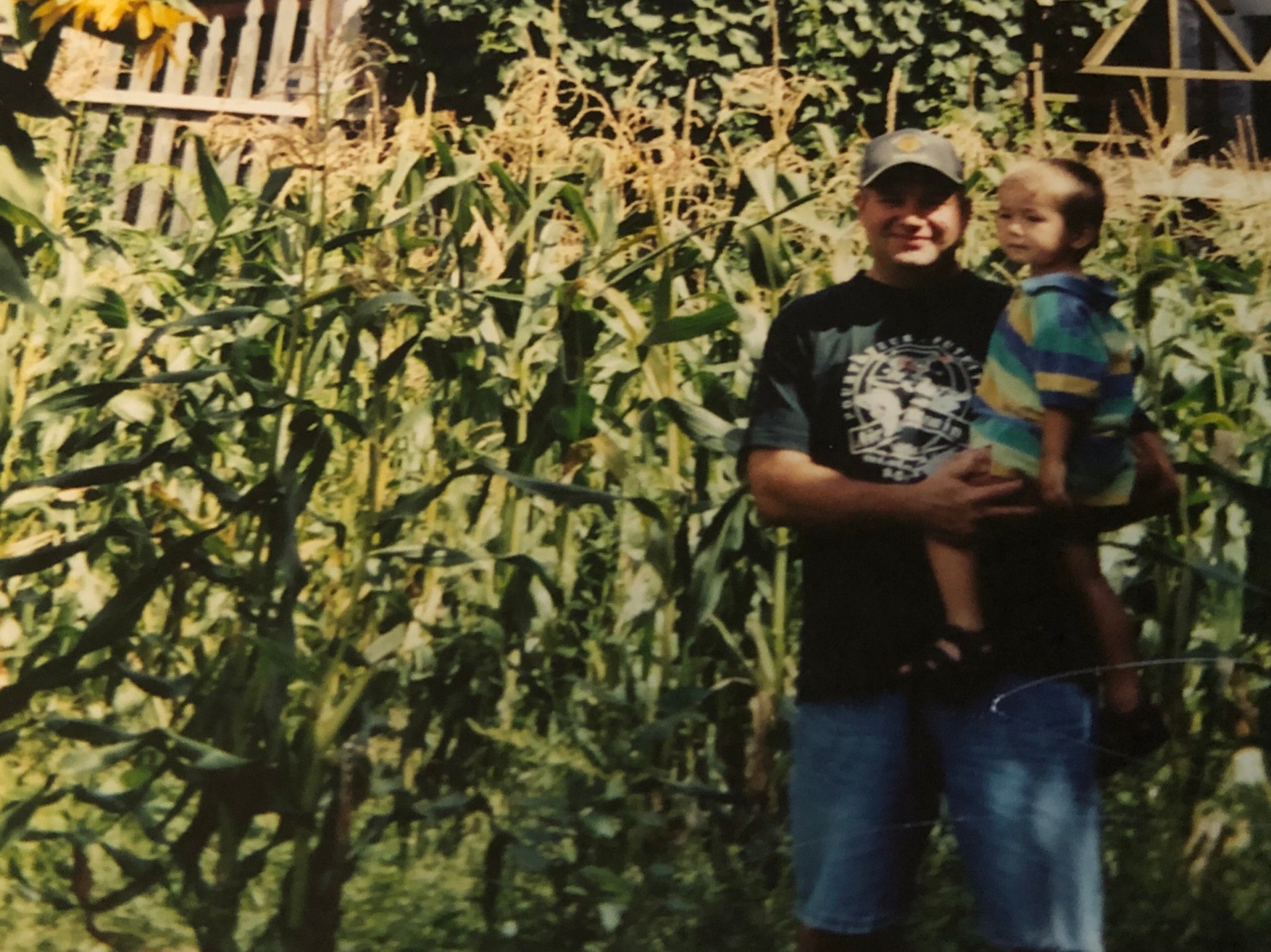
My son and I in front of my grandmother’s massive vegetable garden – seems like a lifetime ago.

Watering and mowing the area around the numerous fruit trees and vegetable gardens at my grandparents’ house is a cherished memory. If growing food is a trend, well, the Italian immigrants were the original trendsetters. Pears, cherries, corn, peaches, zucchini, tomatoes, beans, basil – back in the day, we had it all.

Apparently, this way of life is making a long overdue comeback.

Where some of us may be looking to grow our own food, the concrete trend we can point to is everyone is now, for better or worse, cooking their own food.

Restaurants, surviving on a pivot to providing optimum curbside take out and delivery service, may finally open soon. But a 25% occupancy may be all that’s allowed at first, to enhance social distancing and safety protocols.

I wonder aloud, yet again: when the openings happen, how many of us will show up?

Do you really want to sit at a table, being approached by a waiter who needs to pull down his N95 mask to say “May I take your order?”

I don’t know about you, but I may be waiting awhile to inhabit my favorite restaurants.

img_1063_original
Pan fried meatballs in our kitchen, just like the old ladies used to make.

We’ll basically keep doing what we’ve always done: cook the majority of our meals ourselves, in our own kitchen.

While no slouches in the kitchen to begin with, we’ve taken our normal cadence of food prep to another level – especially my wife, whose furlough from her job has given her an abundance of time to take it there.

The constant activity in the kitchen is the thing that most reminds me of my childhood: one Sicilian or another would always be in the kitchen cranking out dishes that would provide calories, sustenance, and most importantly, the comfort and connection we craved.

That sense of connection is needed more now, to carry us through uncertainty that we face.

When we’re in the kitchen together, the outside world is banished.

Aromas permeate the house that bring back the cooking sessions of my childhood, where I was just an observer.

They bring back the conversations with my grandmother, memories of great aunts and uncles now gone. The stories told, lessons learned.

It’s relaxing, energizing, comforting. Just the tonic we need to bring us through the pandemic age.

Like this article? Please share on your favorite social media channel. For additional articles, see the related content below, or connect with us on Facebook. To be notified of future posts, please enter your email in the space provided.

The Family Ties That Bind, and the Greatest Grilled Cheese Ever


CA19AE77-C33D-4A92-AD0A-04EA6FB9D961
Aunt Carmel, center, with my great grandmother Maria, and family friend Maria Commis

If you’ve been with me on this journey somewhere over these 130+ blog posts, you’re intimately familiar with my thoughts, and the specific love and admiration I have for all things family.

You’ve met the individuals who I consider the titans of our little tribe, many of them more than once: my Nonna, who arguably is the reason I started putting my fingers to a keyboard. My great aunt, also my godmother, dubbed the “Last Sicilian.” You’ve met Dominick a number of times, as well as Mariano and Antonio.

All amazing people, with equally amazing stories, that I feel compelled to share with you.

But there is one glaring omission: one that has gone for far too long and needs to be rectified.

This sin of omission happens, perhaps, for the lack of key memories. This family figure passed away when I was just a boy, not even yet a teenager.

I called her Aunt Carmel, but Carmela Tagliarini Prezio was my great aunt, my grandmother’s sister, who came here with her sisters as part of the immigration wave of Southern Italians and Sicilians to this country.

Between around 1880 and 1924, more than four million Italians immigrated to the United States, half of them between 1900 and 1910 alone—the majority fleeing grinding rural poverty in Southern Italy and Sicily.

My “Aunt Carmel” had such a giant personality and family care taking instincts that she had a chance to supplant her sisters, my grandmother and godmother, as being my favorite. She just left us a little too soon to find out.2386CD98-AD99-461C-8DB6-E6ED78E53819

Her story (and their story) emigrating to the wintry slop of New York from sunny Sicily, is a dramatic one. Although I believe the connection between Italians and organized crime is an overblown stereotype perpetuated by Hollywood cinema, a true crime story was happening in Sicily to drive my grandmother’s family out.

My great-grandfather, Calogero, was running a warehouse for the government in Sicily. The local branch of organized crime targeted him as a revenue source, which he had no interest in complying with. The situation became more extreme with a warning gunshot to my great grandfather’s foot, and the future decision was made to flee Sicily when they could.

Aunt Carmel was like many other Sicilian immigrants: hard working, entrenched in her faith, and centered around family. There were mighty struggles, and good times, throughout her life. Her husband, Anthony Prezio, carved his path as one of our family’s first entrepreneurs (and restaurant owners) after holding a series of jobs.

If you’re familiar with immigration history, many of those that came to America (Irish and Italians included) were offered only the most menial, sometimes dangerous, manual labor jobs.

For some Italians, the only way for upward mobility was to start a business, in an attempt to control their own destiny.

1244BD83-D3C2-47AE-A5AB-D1D7F3E1B62F
Celebrating life and love with family

My connection with Aunt Carmel was a close one, as the family was tight knit, living on the same block on the same street, as many immigrants were to do. My grandmother lived directly across the street, so us kids would bounce back and forth between houses as necessary.

The most consistent memory of my aunt was as I was coming home from elementary school for lunch, stopping at her house to be fed. Since my parents and grandparents were working outside the home, Carmela invited me into her’s for many wonderful meals.

Her specialty  was a toasted cheese sandwich: not a grilled cheese, mind you, but a cheese sandwich made crunchy and melty within an actual toaster oven. Fantastic.

Being the spoiled child that I was (remember, I had more than a couple of Sicilians to provide meals, making sure I was well fed) I remember asking her if we could have something else after a long succession of lunch time toasted cheese.

Looking back on my adolescent complaint of “toasted cheese, again?”, I would love to travel back in time, just to have one more of those sandwiches.

But the sandwich is only symbolic, wouldn’t you say?

To my younger self, that sandwich meant comfort, safety, security. A place to turn where there was nowhere else to go, however temporarily.

Carmela, along with her sisters Rose and Nicolina, represented all that was right with the world. Whatever trivial matters could go wrong in the life of an adolescent me, they were the port of refuge that provided that comfort and security.

And that was the ladies. The men, once they came home, reinforced it all.

It’s said we are a country divided, here in 2020. It’s thought very few of us can be trusted, and we’ll need those sources of comfort and security to believe that, as in the early 70’s at Carmela Prezio’s kitchen table, “all is right with the world.”

More than that, reflection on the generosity, faith, and kindness they all displayed instill in me the belief that we aren’t really divided at all: just a little lost, and trying to find our way.

Aunt Carmel passed away when I was only 12 years old, so our relationship never really had a chance to blossom fully, but we are kindred spirits even now as she enjoyed writing her thoughts down as much as I do. And her sisters were the gift to me that kept on giving.

It’s with the memory of their guidance that I use to find myself, each and every day.

Like this article? Please share on your favorite social media channel. Or better yet… read some more, with the related content below. To be notified of future posts, please enter your email in the space provided. And feel free to leave a comment below!